Quick Overview
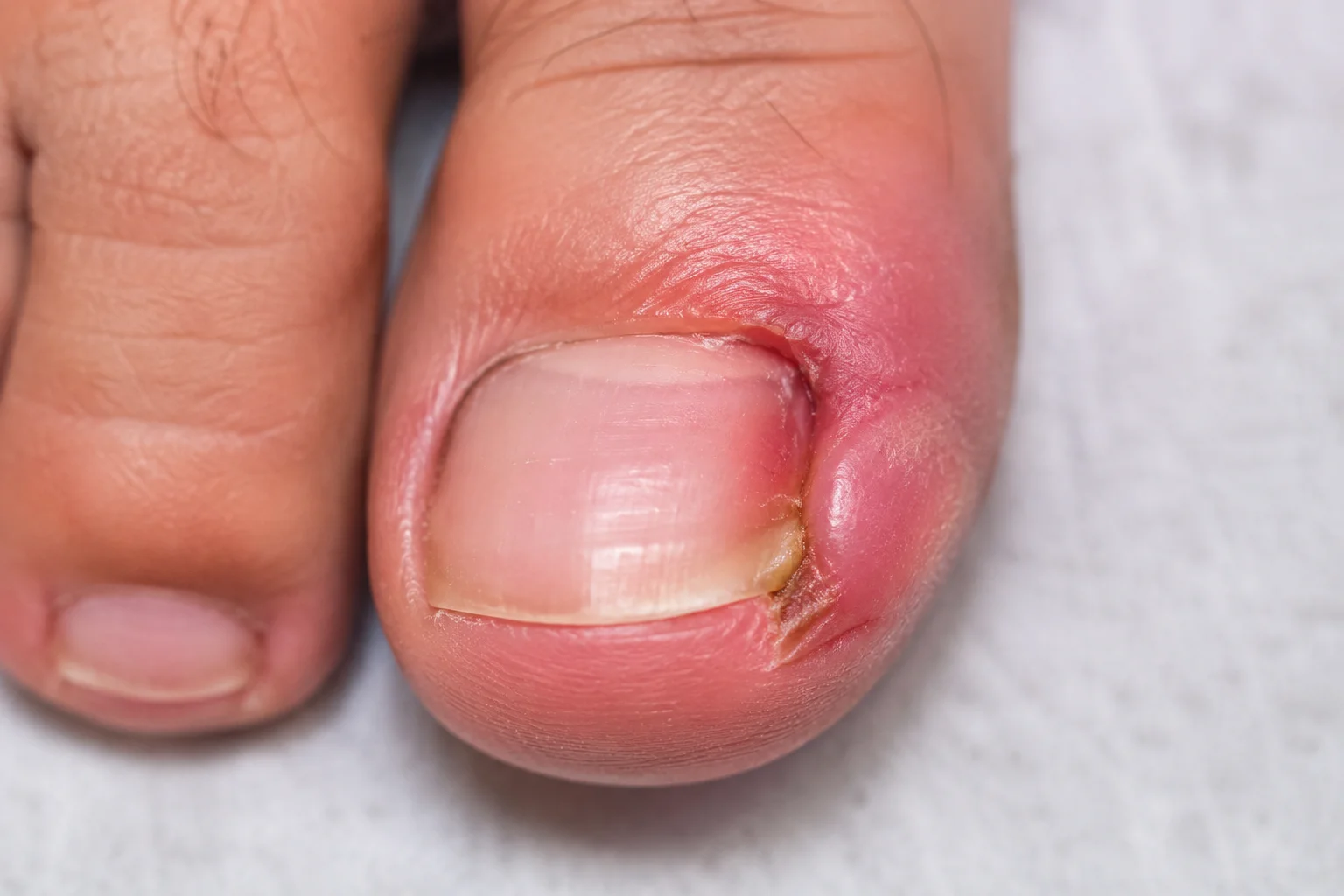
Ingrown toenail swelling is your body’s inflammatory response to a nail edge or corner that has penetrated or is pressing into the surrounding skin fold (sulcus). Mild swelling with redness and tenderness is a sign that the nail is irritating the tissue but infection has not yet developed. Moderate swelling with increased pain, warmth, and the beginning of fluid buildup suggests the tissue is becoming overwhelmed and infection may be starting. Severe swelling with pus, discharge, overgrown tissue (hypergranulation), or red streaking indicates active infection that requires urgent professional treatment. At each stage, the right response is different: mild swelling can sometimes be managed at home with correct care, but anything beyond mild requires professional podiatric assessment to prevent the situation from escalating into something significantly more painful and complex to treat.
At Sydney Foot Doctor, ingrown toenail treatment is one of our most frequent presentations across all eight clinics, and we see the full spectrum from early irritation to advanced infection.
What Causes the Swelling?
Ingrown toenail swelling is not caused by the nail growing in the wrong direction. The nail grows straight, as it always does. The problem is that the edge or corner of the nail presses into, cuts into, or pierces the soft skin fold alongside it. This can happen for several reasons.
Incorrect nail cutting is the most common cause. Cutting the nail too short, rounding the corners, or tearing the nail leaves a sharp edge or spicule that digs into the skin as the nail grows forward. This is particularly common on the big toe where the nail is widest and the skin folds are most prominent.
Tight or narrow footwear compresses the toes together, pushing the skin fold against the nail edge. Over time, this constant pressure causes the skin to become irritated, inflamed, and eventually penetrated by the nail. A footwear assessment identifies whether your shoes are contributing to the problem.
Nail shape and genetics play a role for some people. Naturally curved or involuted (pincer-shaped) nails are more prone to pressing into the skin fold because the nail edge curves downward into the tissue rather than growing flat across the nail bed.
Trauma to the nail from stubbing the toe, dropping something on it, or repetitive pressure from sport (particularly running and football) can cause the nail to shift, crack, or fragment, leaving sharp edges that penetrate the skin.
Excessive moisture from sweating feet, prolonged shoe wear, or not drying feet properly softens the skin around the nail, making it easier for the nail edge to push into the tissue. Athletes and people who wear closed shoes for long hours are particularly susceptible.
Once the nail edge penetrates the skin, the body responds with inflammation: increased blood flow to the area (causing redness and warmth), fluid accumulation in the tissue (causing swelling), and nerve sensitisation (causing pain and tenderness). This inflammatory response is the first stage of the problem. What happens next depends on whether the cause is addressed or ignored.
“Most patients who come to us with severely infected ingrown toenails say the same thing: ‘It started as a bit of redness and I thought it would go away on its own.’ The swelling is your body telling you that the nail is causing tissue damage. The longer that damage continues, the more complex the treatment becomes.”
The Three Stages of Ingrown Toenail Swelling
Understanding which stage you are at determines the right response.
| Stage | What You See and Feel | What Is Happening | What to Do |
|---|---|---|---|
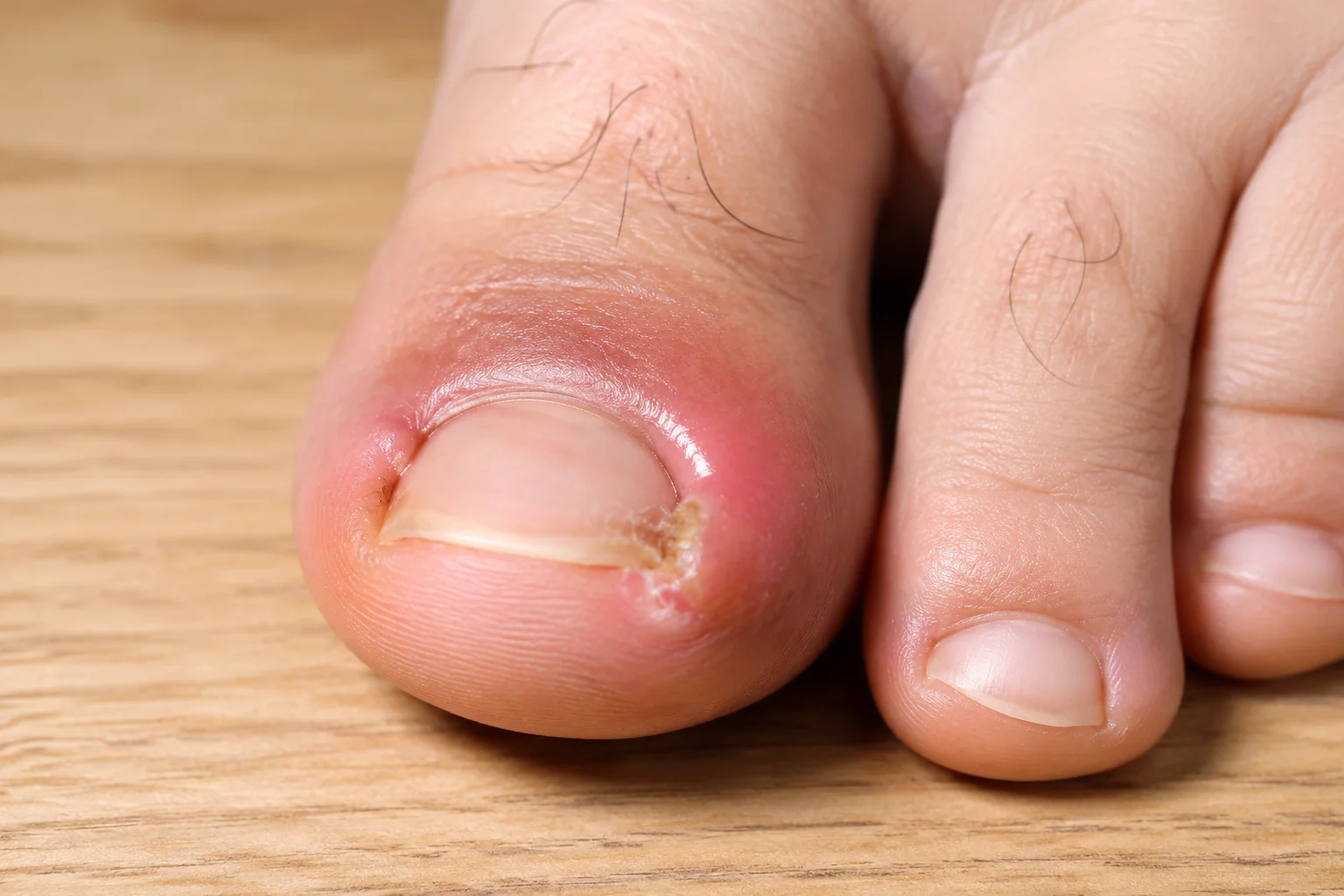
| Stage 1: Mild (Irritation) | Redness along one side of the nail fold. Mild swelling. Tenderness when pressed or when wearing shoes. No discharge. | The nail edge is pressing against the skin but has not pierced it. Inflammation is localised. No infection. | Home care may help (see below). If not improving within 3 to 5 days, see a podiatrist. |
| Stage 2: Moderate (Early Infection) | Increased swelling and redness spreading beyond the nail fold. Constant pain (not just when pressed). Clear or slightly cloudy fluid weeping from the area. Warmth around the toe. | The nail has pierced the skin. Bacteria have entered the wound. The body’s immune response is escalating. Infection is developing. | Professional podiatric treatment needed. Do not attempt home surgery. |
| Stage 3: Severe (Established Infection) | Significant swelling. Pus (yellow or green discharge). Overgrown tissue (red, beefy, moist tissue growing over the nail edge). Pain is constant and throbbing. Red streaking may extend up the toe or foot. | Active bacterial infection is established. Hypergranulation tissue has formed. The nail spicule is now embedded in infected tissue. | Urgent podiatric treatment required. May need ingrown toenail surgery and antibiotics. |
If you are at Stage 2 or 3, do not delay seeking professional help. Infection in a toe can spread to the bone (osteomyelitis) in severe cases, particularly in patients with diabetes or compromised circulation. For patients managing diabetic foot care, any toe swelling or redness should be assessed promptly.
What You Can Do at Home (Stage 1 Only)
If the swelling is mild, with no discharge, no pus, and no sign of infection, these home measures may resolve it.
Soak the foot in warm salt water for 10 to 15 minutes, two to three times daily. Use a tablespoon of table salt in a basin of warm (not hot) water. This softens the skin around the nail and helps reduce inflammation. After soaking, dry the toe thoroughly.
Gently lift the nail edge if you can see it clearly and it is accessible. After soaking, use a clean piece of dental floss or a small amount of clean cotton to gently ease the nail edge away from the skin fold. This relieves the pressure and allows the skin to heal. Do not force it if it is painful or if the nail is deeply embedded.
Wear open-toed shoes or loose footwear to remove pressure from the affected toe. Tight shoes compress the skin against the nail and prevent healing.
Do not cut a V in the nail. This is a persistent myth that has no basis in podiatric science. Cutting a V-shaped notch in the centre of the nail does not change how the nail grows at the edges. It just weakens the nail.
Do not perform bathroom surgery. Digging at the nail with scissors, nail clippers, or sharp instruments at home is the single most common cause of Stage 1 progressing to Stage 2 and Stage 3. Unsterile instruments introduce bacteria, and aggressive digging causes further tissue trauma that makes the infection worse.
If home care does not improve the situation within three to five days, or if the swelling, redness, or pain increases despite your efforts, book an appointment with a podiatrist. The ingrown toenail treatment page covers what professional care involves.
Professional Treatment for Ingrown Toenail Swelling
When home care is not enough, or when infection has developed, professional podiatric treatment addresses both the immediate symptoms and the underlying cause.
Conservative treatment (Stage 1 to early Stage 2): Your podiatrist carefully removes the offending nail edge or spicule using sterile instruments under proper clinical conditions. This is often all that is needed to resolve the pain and swelling immediately. The nail fold is cleaned and dressed, and you receive advice on correct nail cutting technique and footwear to prevent recurrence. This is a standard part of ingrown toenail treatment at Sydney Foot Doctor.
Partial nail avulsion (Stage 2 to Stage 3 or recurrent cases): For moderate to severe cases or ingrown toenails that keep returning, a minor surgical procedure called a partial nail avulsion (PNA) permanently resolves the problem. Under local anaesthetic, the offending nail edge is removed and a chemical (phenol) is applied to the nail matrix (growth centre) to prevent that portion of the nail from regrowing. The procedure takes approximately 30 to 45 minutes, is performed in the clinic, and you walk out immediately afterward.
This is the definitive treatment for ingrown toenails that recur despite conservative care. The ingrown toenail surgery page covers the procedure, recovery, and aftercare in detail. For patients with recurring ingrown toenails, this procedure stops the cycle permanently.
Infection management: If infection is present, your podiatrist will clean and drain the infected area, remove the offending nail spicule, apply appropriate antiseptic dressing, and may recommend oral antibiotics if the infection has spread beyond the immediate nail fold. Antibiotics alone (without removing the nail spicule causing the problem) do not resolve the issue because the physical cause of the infection remains in place.
Why Ingrown Toenail Swelling Gets Worse Without Treatment
Left untreated, ingrown toenails follow a predictable escalation pattern.
The nail keeps growing. The offending nail edge does not stop growing just because it is causing pain. Every day, it pushes further into the skin, deepening the wound and increasing the inflammatory response.
Bacteria multiply. The warm, moist, enclosed environment inside a shoe is ideal for bacterial growth. Once the nail has pierced the skin and created an entry point, bacteria colonise the wound and multiply rapidly.
Hypergranulation tissue forms. In response to the ongoing wound, the body produces excess granulation tissue: the red, beefy, moist tissue that grows over the nail edge in chronic cases. This tissue bleeds easily, produces discharge, and makes the condition look and feel significantly worse. Once hypergranulation tissue has formed, conservative nail removal alone may not be sufficient, and a partial nail avulsion is usually required.
Pain increases progressively. What started as mild tenderness becomes constant throbbing pain that interferes with walking, wearing shoes, sleeping, and daily activities.
Infection can spread. In rare but serious cases, infection from an untreated ingrown toenail can spread to the underlying bone (osteomyelitis) or into the bloodstream. This is most common in patients with diabetes, peripheral vascular disease, or immune compromise, but it can occur in otherwise healthy individuals if the infection is left long enough.
How to Prevent Ingrown Toenail Swelling from Returning
Prevention is significantly easier than treatment. These habits reduce the risk of future episodes.
Cut nails correctly. Trim straight across, not too short, and do not round the corners. The nail edge should be visible beyond the skin fold on both sides. File any sharp edges gently rather than cutting them. If you are unsure about safe nail cutting technique, a professional medical pedicure (MediPedi) provides clinical-grade nail care in a sterile environment.
Wear properly fitting footwear. Shoes should have adequate width in the toe box so the toes are not compressed together. The nail should not press against the inside of the shoe or against the adjacent toe. A footwear assessment ensures your shoes are not contributing to the problem.
Keep feet clean and dry. Wash daily, dry thoroughly (especially around the toes), and change socks daily. Moisture softens the skin and makes penetration by the nail edge more likely.
Protect toes during sport. Runners, footballers, and athletes in sports with repetitive toe impact should wear properly sized athletic shoes and keep nails trimmed. Sports podiatry assessments address sport-specific foot issues including nail problems.
Do not pick or tear nails. Pulling at or tearing a nail rather than cutting it cleanly leaves jagged edges and nail fragments that grow into the skin fold.
Address recurring ingrown toenails permanently. If the same nail keeps becoming ingrown despite correct cutting and footwear, the nail shape itself is likely the cause. A partial nail avulsion permanently narrows the nail so the problem cannot recur. Read the recurring ingrown toenail guide for the full explanation.
When to See a Podiatrist Immediately
Do not wait if any of the following apply. Pus or discharge of any colour is coming from the nail fold. The swelling, redness, or pain is getting worse despite home care. Red streaking is visible extending from the toe up the foot. The toe is warm to the touch compared to the other toes. You have diabetes, poor circulation, or a compromised immune system (any toe swelling in these patients should be assessed promptly). The ingrown toenail keeps coming back despite correct home care. You cannot wear shoes or walk comfortably due to the pain.
Sydney Foot Doctor treats ingrown toenails across eight Sydney clinics, all located inside medical centres. For children with ingrown toenails, the children’s podiatry service provides age-appropriate care.
Ingrown Toenail Swelling: The Three Stages and What to Do
Recognise which stage you are at. Each stage needs a different response.
Stage 1: Mild
What you see:
Redness along one side of the nail fold
Mild swelling, tenderness when pressed
No discharge, no pus
What to do:
Warm salt water soaks
Gently lift nail edge if accessible
Wear open or loose shoes
See podiatrist if no improvement in 3 to 5 days
Stage 2: Moderate
What you see:
Increased swelling and redness
Constant pain, not just when pressed
Clear or cloudy fluid weeping
What to do:
Book a podiatrist appointment
Do NOT attempt home surgery
Keep clean and covered
Professional treatment needed
Stage 3: Severe
What you see:
Pus (yellow or green discharge)
Red, beefy overgrown tissue
Throbbing pain, possible red streaking
What to do:
See a podiatrist urgently
May need minor surgery (PNA)
Antibiotics may be required
Urgent professional treatment required
Common Causes
Cutting Too Short
Rounding corners or cutting too short leaves sharp edges.
Tight Shoes
Narrow toe box pushes skin against nail edge.
Nail Shape
Curved or involuted nails press into the skin fold naturally.
Toe Trauma
Stubbing, impact, or repetitive sport pressure shifts the nail.
Moisture
Sweaty feet soften skin, making nail penetration easier.
What NOT to Do
Bathroom Surgery
Digging at the nail with scissors, clippers, or sharp instruments at home introduces bacteria and worsens the infection. The number one cause of Stage 1 progressing to Stage 3.
Cutting a V in the Nail
A persistent myth with no podiatric basis. Cutting a V-shape in the centre does not change how the edges grow. It just weakens the nail.
💡 The Key Takeaway
Mild swelling with no infection can sometimes be managed at home. Anything beyond that, including discharge, pus, increasing pain, or warmth, needs professional podiatric treatment. The longer you wait, the more complex and painful the treatment becomes. Early intervention is always simpler, faster, and less painful.
sydneyfootdoctor.com.au | Sydney Foot Doctor | 8 Clinics Across Sydney