Quick Overview
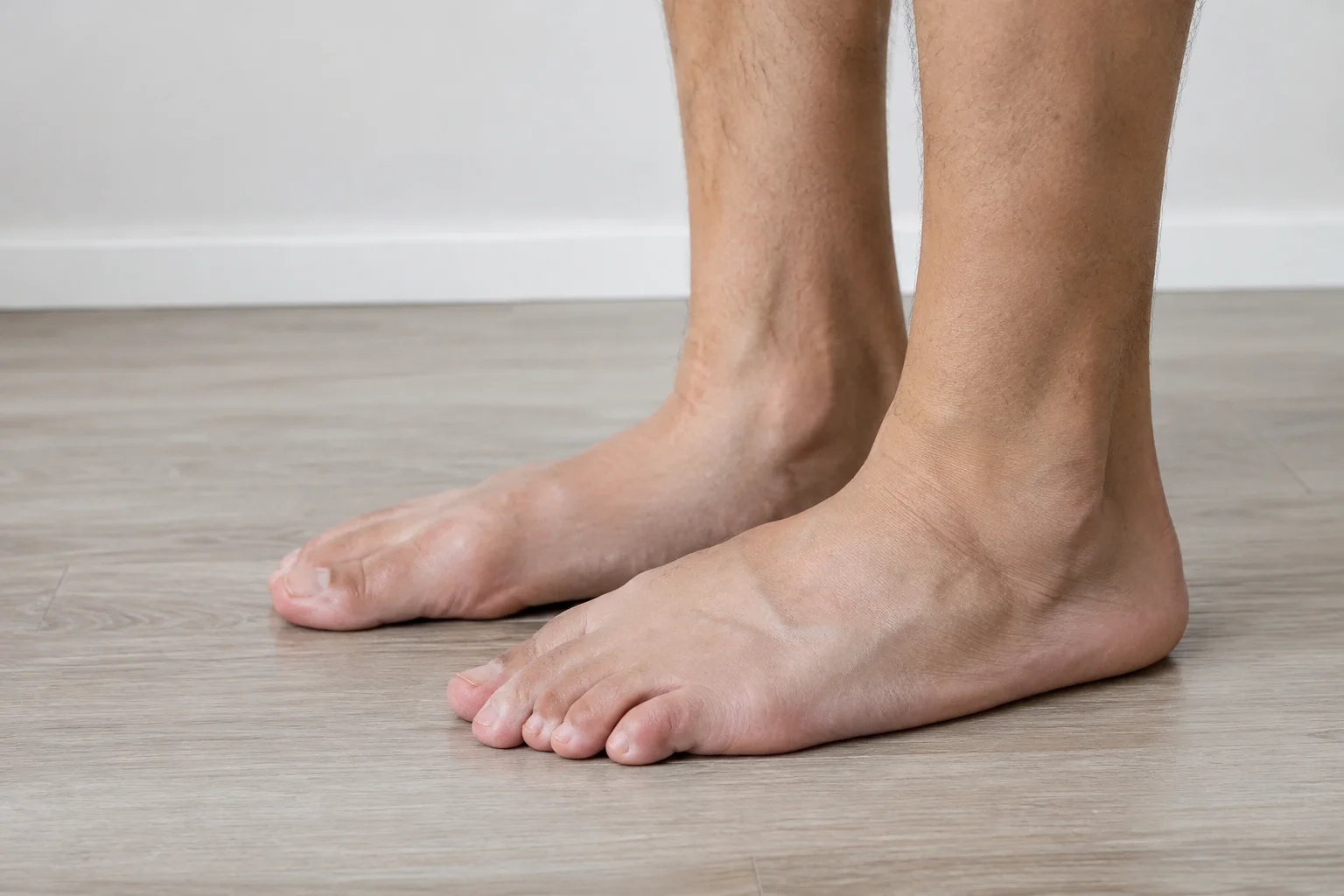
Flat feet in adults (pes planus) refers to a foot posture where the arch is low or absent when standing, allowing the entire sole of the foot to contact the ground. Flat feet fall into two categories: flexible flat feet (the arch is visible when sitting or standing on tiptoes but flattens under body weight) and rigid flat feet (the arch is absent in all positions). Most adults with flat feet have the flexible type. Flat feet are not automatically a problem. Many adults live their entire lives with low arches and no symptoms. Treatment is only necessary when flat feet cause pain, dysfunction, or secondary problems elsewhere in the body (ankle instability, shin splints, knee pain, hip pain, or lower back pain). When treatment is needed, a podiatrist assesses the foot structure, gait biomechanics, and footwear to determine what is causing the symptoms. Treatment typically includes custom orthotics to support the arch and correct alignment, a footwear assessment to ensure shoes are not making the problem worse, strengthening exercises for the muscles that support the arch, and activity modifications where needed.
At Sydney Foot Doctor, flat feet assessment and management is one of the most common reasons adults visit our clinics.
What Are Flat Feet
In a typical foot, the medial longitudinal arch (the curve along the inside of the foot from the heel to the ball) lifts off the ground when standing, creating a visible gap between the inside of the foot and the floor. In a flat foot, this arch is reduced or absent, and the inside of the foot sits closer to (or flat on) the ground.
Flexible flat feet are the most common type in adults. The arch is present when the foot is not bearing weight (sitting, lying down, standing on tiptoes) but collapses under the load of body weight. The foot is mobile and the joints move freely. Most people with flexible flat feet have had them since childhood, and for many they cause no issues at all.
Rigid flat feet are less common and more likely to cause symptoms. The arch is absent regardless of whether the foot is bearing weight or not. The joints in the midfoot are stiff or restricted. Rigid flat feet are more often associated with structural problems (tarsal coalition, arthritis, or previous injury) and are more likely to require treatment.
Adult-acquired flat foot (also called posterior tibial tendon dysfunction or PTTD) is a specific condition where an adult who previously had a normal arch develops a flat foot over time. The posterior tibial tendon, which runs along the inside of the ankle and supports the arch, weakens, stretches, or tears. Without its support, the arch collapses progressively. This is the type of flat foot that most commonly causes pain in adults over 40 and, if left untreated, can progress to a rigid deformity.
What Causes Flat Feet in Adults
| Cause | How It Leads to Flat Feet | Who It Affects |
|---|---|---|
| Genetics and childhood development | The arch simply did not develop fully during childhood. The foot has always been flat. This is usually flexible flat foot and is often painless. | Adults who have had flat feet since childhood. Often runs in families. |
| Posterior tibial tendon dysfunction (PTTD) | The tendon that supports the arch weakens, stretches, or tears over time. The arch collapses progressively. This is the most common cause of new-onset flat feet in adults. | Adults over 40, particularly women. Higher risk with obesity, diabetes, hypertension, and previous ankle injury. |
| Injury | Fractures, dislocations, or severe ligament injuries to the midfoot or hindfoot can damage the structures that maintain the arch. | Any adult who has sustained a significant foot or ankle injury. |
| Arthritis | Inflammatory arthritis (rheumatoid arthritis) or degenerative arthritis in the midfoot joints can erode the joint surfaces and weaken the ligaments that support the arch. | Adults with inflammatory or degenerative joint conditions. |
| Obesity and prolonged standing | Excess body weight increases the load on the arch with every step. Prolonged standing (occupational) applies sustained load that can gradually flatten the arch over years. | Adults carrying excess weight. Workers who stand for extended periods (hospitality, retail, healthcare, construction). |
| Nerve conditions | Conditions that affect the nerves controlling the foot muscles (peripheral neuropathy, Charcot foot) can lead to muscle weakness and arch collapse. | Adults with diabetes, neurological conditions, or nerve damage. |
| Pregnancy | Hormonal changes (relaxin) loosen the ligaments throughout the body, including in the feet. Combined with weight gain, the arch can flatten during pregnancy. This may be temporary or permanent. | Pregnant women, particularly in the second and third trimesters. |
How Flat Feet Affect the Rest of the Body
Flat feet do not just affect the feet. When the arch collapses, the foot rolls inward (overpronation), which changes the alignment of the ankle, shin, knee, hip, and lower back. This chain reaction is why flat feet can cause pain and problems well above the foot.
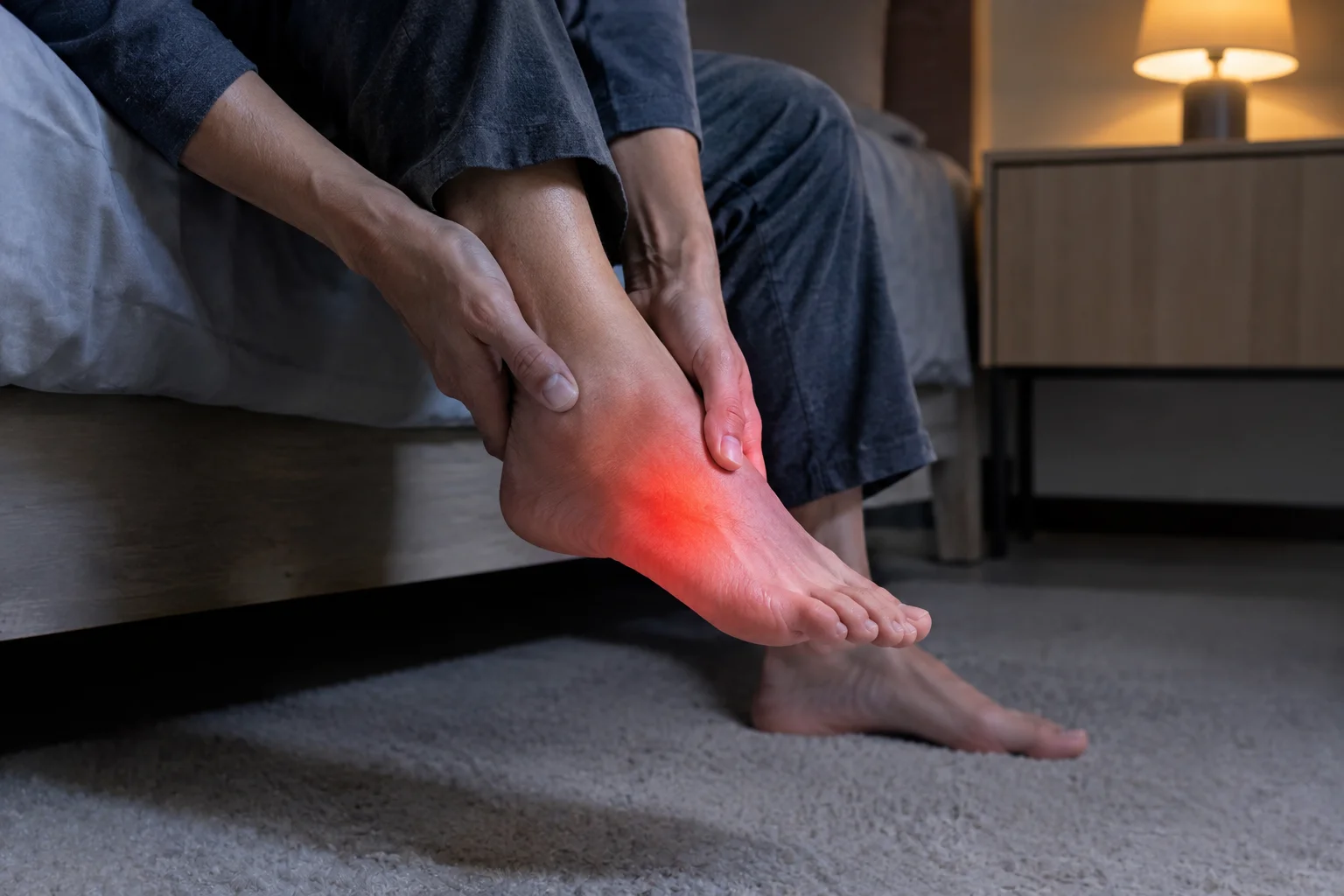
Feet. Arch pain, heel pain (plantar fasciitis is more common in flat feet), pain along the inside of the ankle (where the posterior tibial tendon runs), and ball-of-foot pain from altered weight distribution.
Ankles. The inward roll of the foot places the ankle in a less stable position, increasing the risk of ankle sprains and chronic ankle instability.
Shins. Overpronation changes how the calf muscles and shin muscles work during walking and running, increasing the risk of shin splints (medial tibial stress syndrome). For runners, this is one of the most common secondary effects of flat feet. Read the why does my foot hurt when I run guide for more on running-related foot pain.
Knees. The inward rotation of the shin that follows overpronation can alter the tracking of the kneecap (patella) and place additional stress on the inside of the knee. Flat feet are a known contributing factor in patellofemoral pain and medial knee osteoarthritis.
Hips and lower back. The cumulative effect of altered alignment from the ground up can change pelvic position and increase stress on the lower back. Adults with flat feet are more likely to report lower back pain than those with neutral arches.
“The chain of connection from the foot to the lower back is direct and measurable. When the arch collapses, the foot rolls in. When the foot rolls in, the shin rotates. When the shin rotates, the knee tracks differently. When the knee tracks differently, the hip compensates. When the hip compensates, the lower back feels it. This is why a podiatrist treating knee pain or lower back pain starts by looking at the feet.”
When Flat Feet Need Treatment
Not all flat feet need treatment. The decision depends entirely on symptoms and function.
Treatment is NOT needed when:
- You have had flat feet your whole life with no pain
- Your feet are flexible and mobile
- You can walk, run, and stand without discomfort
- You have no secondary problems (no ankle instability, no knee pain, no shin pain, no back pain)
- Your flat feet are simply a normal variant of foot posture
Treatment IS needed when:
- Your flat feet cause pain in the arch, heel, ankle, or along the inside of the foot
- You have developed flat feet as an adult (your arch used to be higher and has collapsed)
- You have ankle instability or frequent ankle sprains
- You have knee pain, shin splints, or lower back pain that may be linked to your foot posture
- Your flat feet limit your ability to walk, stand, exercise, or work comfortably
- You notice your foot posture changing (the arch getting lower over time, the foot getting wider, the ankle rolling further inward)
- You have calluses forming in unusual patterns from altered weight distribution
If you are unsure whether your flat feet need assessment, the presence of any pain or functional limitation is enough reason to see a podiatrist.
How a Podiatrist Treats Flat Feet
Treatment follows a structured assessment and management process.
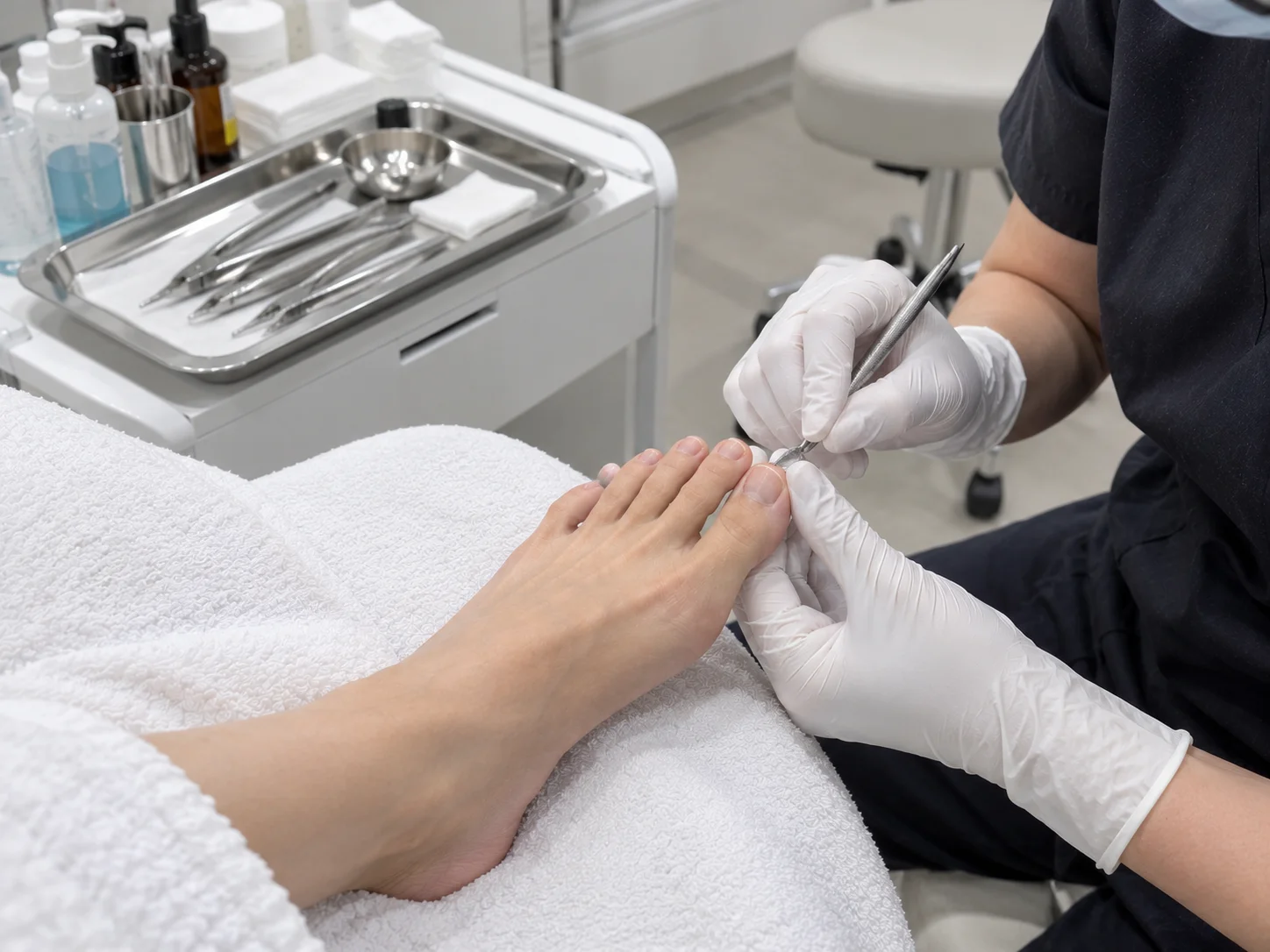
Step 1: Biomechanical assessment. The podiatrist examines your foot structure (arch height, joint mobility, muscle strength), ankle alignment, and leg alignment. This determines whether your flat feet are flexible or rigid, whether the posterior tibial tendon is functioning, and which structures are contributing to the problem.
Step 2: Gait analysis. You walk (and run, if relevant) while the podiatrist observes your gait pattern. This reveals how much the foot pronates during movement, how the arch behaves under dynamic load, and where the biomechanical compensation is occurring up the chain. Gait analysis is different from a static examination because many flat feet behave differently in motion than they do standing still.
Step 3: Footwear assessment. Your current footwear is assessed for support, fit, wear patterns, and suitability for your foot type. Worn-out shoes, shoes with no arch support, or shoes that are too narrow or too flexible can make flat feet symptoms worse. A footwear assessment identifies what to change and what to look for in your next pair. Read the footwear assessment blog for the full process.
Step 4: Custom orthotics. For most adults with symptomatic flat feet, custom orthotics are the primary treatment. A custom orthotic is a prescription insole made from a 3D scan or cast of your foot, designed to support the arch at the correct height, control the degree of pronation, redistribute pressure away from painful areas, and correct alignment through the ankle, knee, and hip. Unlike over-the-counter arch supports (which provide generic support), custom orthotics are made to match your specific foot structure, your specific biomechanics, and your specific symptoms.
Step 5: Strengthening and stretching exercises. The muscles that support the arch (particularly the posterior tibial muscle, the intrinsic foot muscles, and the calf complex) can be strengthened with targeted exercises. Stronger muscles provide dynamic arch support that complements the static support of orthotics. Stretching tight calf muscles is also important because tight calves increase the load on the arch during walking.
Step 6: Activity modification. If certain activities aggravate the symptoms (long-distance running on hard surfaces, prolonged standing at work), the podiatrist may recommend modifications such as reducing impact, changing surfaces, wearing supportive footwear during standing work, or incorporating recovery strategies.
Step 7: Monitoring and progression. Flat feet, particularly adult-acquired flat foot from PTTD, can progress over time. Regular monitoring ensures the treatment remains effective and is adjusted if the condition changes. Early intervention with PTTD is important because advanced cases may require surgical referral if the tendon ruptures or the foot becomes rigidly deformed.
Flat Feet and Footwear
Footwear plays a significant role in managing flat feet. The right shoes support the arch and control pronation. The wrong shoes allow excessive collapse and worsen symptoms.
| Footwear Feature | Why It Matters for Flat Feet |
|---|---|
| Firm midsole with arch support | Supports the arch from underneath and reduces the degree of collapse under body weight. |
| Heel counter (firm back of the shoe) | Holds the heel in a neutral position and reduces the inward roll at the ankle. A shoe where you can fold the heel counter flat with your thumb does not provide enough support. |
| Motion control or stability category | Running and athletic shoes in the “stability” or “motion control” category are designed for overpronation. They include medial posting (firmer material on the inside of the midsole) that resists inward roll. |
| Adequate width | Flat feet tend to be wider because the arch has collapsed and the foot spreads. Shoes that are too narrow compress the foot and create additional problems (bunions, calluses, nerve compression). |
| Removable insole | Allows you to replace the factory insole with your custom orthotic. If the insole is glued in, the orthotic sits on top and the shoe may feel too tight. |
| Avoid completely flat, flexible shoes | Ballet flats, thongs (flip-flops), Converse-style shoes, and most fashion shoes provide no arch support and no pronation control. They are the worst footwear choices for symptomatic flat feet. |
A footwear assessment at Sydney Foot Doctor evaluates your current shoes and provides specific recommendations for your foot type, your activity level, and your orthotics (if prescribed). For the full assessment process, read the footwear assessment guide.
Flat Feet in Adults vs Children
Adults sometimes ask whether their flat feet should have been treated in childhood. The answer is nuanced.
Most children have flat feet until around age 6 to 8 as the arch develops. Flexible flat feet in children that are painless and functional are generally considered a normal developmental variant and do not require treatment. Flat feet that persist into adulthood from childhood are usually the flexible, painless type.
Adult-acquired flat foot (PTTD) is a different condition from childhood flat feet. It develops later in life due to tendon degeneration, not a developmental variation. This is the type that most commonly needs active treatment in adults.
If your child has flat feet that concern you, or if flat feet run in your family, a podiatrist can assess whether monitoring or early intervention is appropriate. At Sydney Foot Doctor, we see both adult and paediatric flat feet.
Flat Feet in Adults
What causes flat feet, how they affect the body, when treatment is needed, and what a podiatrist does to help.
Types of Flat Feet
Flexible Flat Feet
Arch visible when sitting or on tiptoes, flattens under body weight. Most common type. Often painless and present since childhood.
MOST COMMON
Rigid Flat Feet
Arch absent in all positions. Joints stiff or restricted. Often associated with structural problems, arthritis, or injury. More likely to cause symptoms.
LESS COMMON
Adult-Acquired (PTTD)
Previously normal arch that collapses over time. Posterior tibial tendon weakens or tears. Progressive if untreated. Most common cause of painful flat feet over 40.
NEEDS TREATMENT
The Chain Reaction: How Flat Feet Affect the Body
Feet
Arch pain, heel pain, inner ankle pain, ball-of-foot pain from altered pressure.
Ankles
Inward roll creates instability. Higher risk of sprains and chronic instability.
Shins
Overpronation changes muscle function. Increased shin splint risk, especially in runners.
Knees
Shin rotation alters kneecap tracking. Contributes to patellofemoral pain and medial knee stress.
Lower Back
Cumulative misalignment from the ground up changes pelvic position and increases lower back stress.
Treatment Process
Biomechanical Assessment
Foot structure, arch height, joint mobility, muscle strength, ankle and leg alignment assessed to determine type and severity.
Gait Analysis
Walking and running observed to reveal pronation degree, dynamic arch behaviour, and where compensation occurs up the chain.
Footwear Assessment
Current shoes evaluated for support, fit, and wear patterns. Recommendations provided for appropriate footwear for your foot type.
Custom Orthotics
Prescription insoles made from a 3D scan of your foot. Support the arch, control pronation, redistribute pressure, correct alignment.
PRIMARY TREATMENT
Strengthening Exercises
Targeted exercises for the posterior tibial muscle, intrinsic foot muscles, and calf complex. Dynamic arch support that complements orthotics.
Monitoring
Regular review ensures treatment remains effective. Particularly important for PTTD which can progress if not managed properly.
Do Your Flat Feet Need Treatment?
Treatment Probably NOT Needed
Flat feet since childhood with no pain
Feet are flexible and mobile
No secondary problems (knees, back, ankles fine)
Can walk, run, and stand without discomfort
See a Podiatrist
Pain in the arch, heel, ankle, or inner foot
Arch has collapsed as an adult (was not always flat)
Ankle instability or frequent sprains
Knee pain, shin splints, or lower back pain
Foot posture visibly changing over time
💡 The Key Takeaway
Flat feet are not automatically a problem. Many adults live comfortably with low arches their entire lives. Treatment is needed when flat feet cause pain, instability, or secondary problems in the ankles, knees, hips, or lower back. When treatment is needed, the combination of custom orthotics, appropriate footwear, and targeted strengthening addresses both the symptoms and the biomechanical cause.
sydneyfootdoctor.com.au | Sydney Foot Doctor | Podiatry, Orthotics, Foot Health