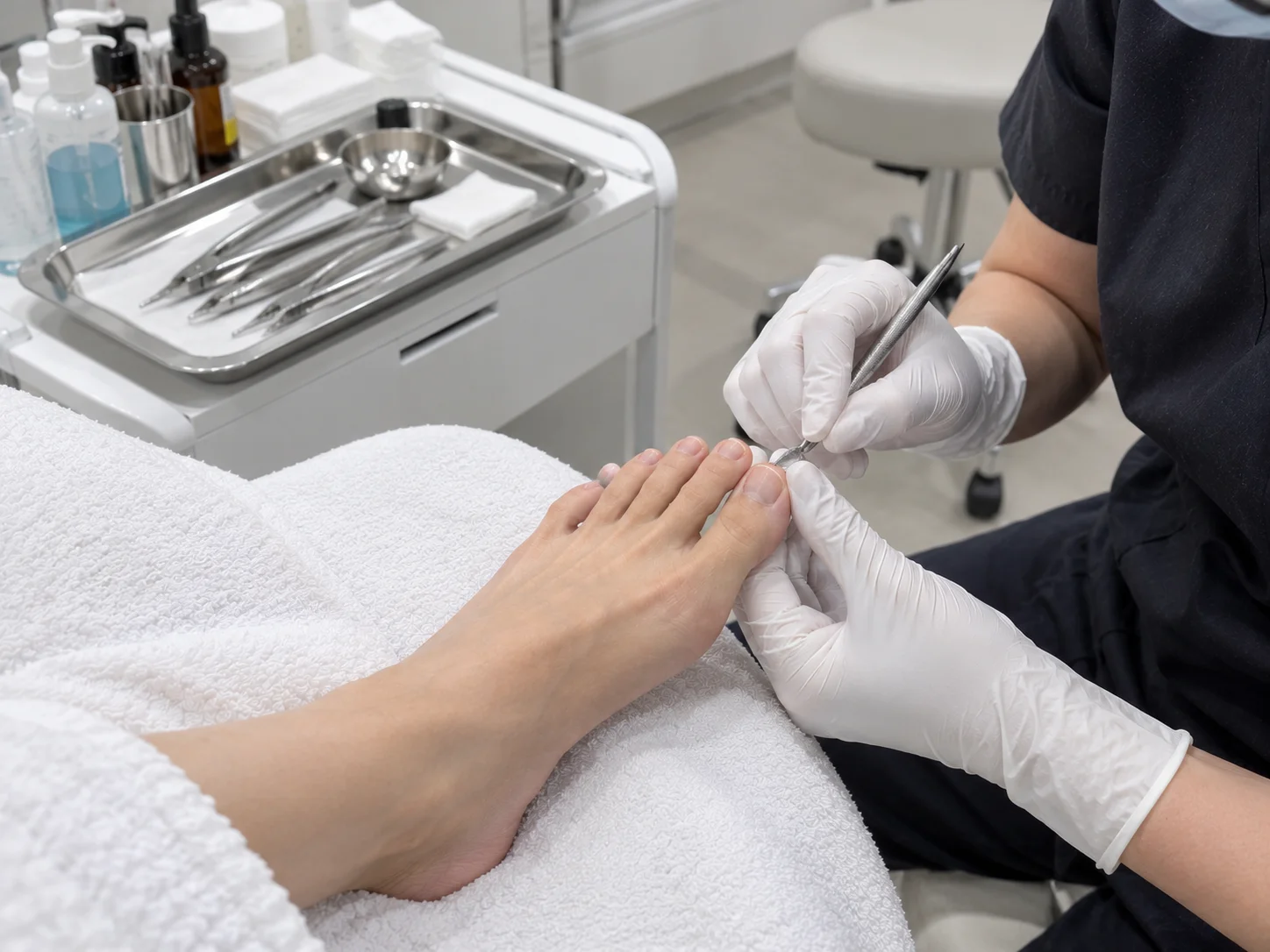
What a Medical Pedicure Includes
A medical pedicure at Sydney Foot Doctor follows a structured clinical protocol that addresses every aspect of foot health and appearance.
| Step | What It Involves | Why It Matters |
|---|---|---|
| Clinical assessment | Your podiatrist examines your feet, nails, and skin before beginning any treatment. Circulation, sensation, skin integrity, nail condition, and any areas of concern are assessed. | Identifies underlying conditions (fungal infections, ingrown toenails, circulation issues, skin pathology) that a salon pedicurist is not qualified to diagnose. Treatment is adapted to what your feet actually need, not a standard menu. |
| Nail trimming and shaping | Toenails are trimmed to the correct length and shape using sterilised podiatric instruments. Thickened, damaged, or deformed nails are carefully reduced using a medical-grade drill with sterilised burrs. | Correct nail trimming technique prevents ingrown toenails. Thickened nails from trauma or fungal infection are safely reduced without pain or damage to the nail bed. |
| Callus and hard skin removal | Calluses, corns, and areas of thickened, hardened skin are removed using a scalpel and medical-grade instruments. | Scalpel debridement by a trained podiatrist removes hard skin precisely and painlessly to the correct depth. Over-reduction (cutting too deep) and under-reduction (leaving too much) are both avoided. The cause of the callus is also assessed. |
| Cuticle care | Cuticles are gently pushed back and tidied. Excess cuticle tissue is carefully removed. | Performed with sterilised instruments and clinical technique. No cutting of live tissue. No risk of infection from unsterilised salon tools. |
| Cracked heel treatment | Fissures and cracks in the heels are debrided, smoothed, and treated with clinical-grade emollients. | Deep heel cracks (fissures) can bleed, become infected, and cause significant pain if left untreated. A podiatrist assesses the depth and treats appropriately. For severe cases, ongoing general podiatry care manages the condition. |
| Skin condition assessment | The skin of the feet is examined for fungal infections (tinea), dermatitis, warts, blisters, and other skin pathology. | Skin conditions on the feet are commonly misidentified. What looks like dry skin may be tinea. What looks like a callus may be a wart. A podiatrist provides accurate diagnosis and treatment, not guesswork. |
| Foot and lower leg massage | A therapeutic massage of the feet and lower legs improves circulation, reduces muscle tension, and provides relaxation. | Combines the clinical benefits of improved blood flow with the wellness benefits of a professional massage. Particularly beneficial for patients who spend long hours standing or have circulation concerns. |
| Moisturising and finishing | Clinical-grade moisturisers and emollients are applied to the feet, targeting dry areas, cracked heels, and rough skin. | Medical-grade products penetrate and condition more effectively than retail cosmetic products. The podiatrist selects the product based on your specific skin condition. |
| Nail polish application (optional) | Non-toxic, breathable nail polish is applied if requested. | Breathable formulations allow moisture and air to pass through the polish, reducing the risk of fungal nail development underneath. Standard nail polish seals the nail surface, which can trap moisture and promote fungal growth. |
How a Medical Pedicure Differs from a Salon Pedicure
The differences are not cosmetic. They are clinical, safety-related, and outcomes-based.
| Medical Pedicure (MediPedi) | Salon Pedicure | |
|---|---|---|
| Performed by | Registered podiatrist with a university degree in podiatric medicine | Beauty therapist or nail technician with a certificate-level qualification |
| Setting | Clinical podiatry practice with medical-grade infection control | Beauty salon or nail bar |
| Instruments | Sterilised (autoclaved) or single-use medical-grade instruments | Instruments may be shared between clients with varying sterilisation standards |
| Infection control | Hospital-grade sterilisation protocols. Single-use items discarded after each patient. Autoclave-sterilised reusable instruments. | Standards vary by salon. Foot baths, files, and instruments may carry cross-contamination risk. |
| Diagnostic capability | Can identify fungal infections, ingrown toenails, warts, dermatitis, circulation issues, diabetic complications, and biomechanical causes of calluses | Cannot diagnose. Treats the cosmetic appearance without addressing underlying conditions. |
| Callus removal method | Scalpel debridement to precise depth by a trained clinician | Filing, pumice, or electric file. Cannot use a scalpel. Less precise removal. |
| Thickened nail management | Medical-grade burr drill reduces thickened nails painlessly. Can treat fungal nails. | Standard filing and clipping. Cannot safely manage severely thickened or fungal nails. |
| Treatment of conditions found | Can treat ingrown toenails, prescribe medication, refer for imaging, manage diabetic foot care, and address biomechanical issues with orthotics | Must refer elsewhere. Cannot treat any condition found during the service. |
| Suitable for high-risk patients | Yes. Diabetics, immunocompromised patients, patients on blood thinners, patients with circulation issues | Not recommended. Higher infection risk and inability to manage complications. |
| Health fund rebate | May be claimable under podiatry cover with eligible health funds | Not claimable |
“The question patients ask most often is ‘what is the difference between this and what I get at the salon?’ The answer is that we do everything the salon does, but we do it with sterilised instruments, clinical training, and the ability to identify and treat whatever we find. A salon pedicurist cannot tell you whether that thick nail is trauma or fungus. They cannot safely remove a deep corn with a scalpel. And they are not trained to assess your circulation before working on your feet. That clinical layer is the difference.”
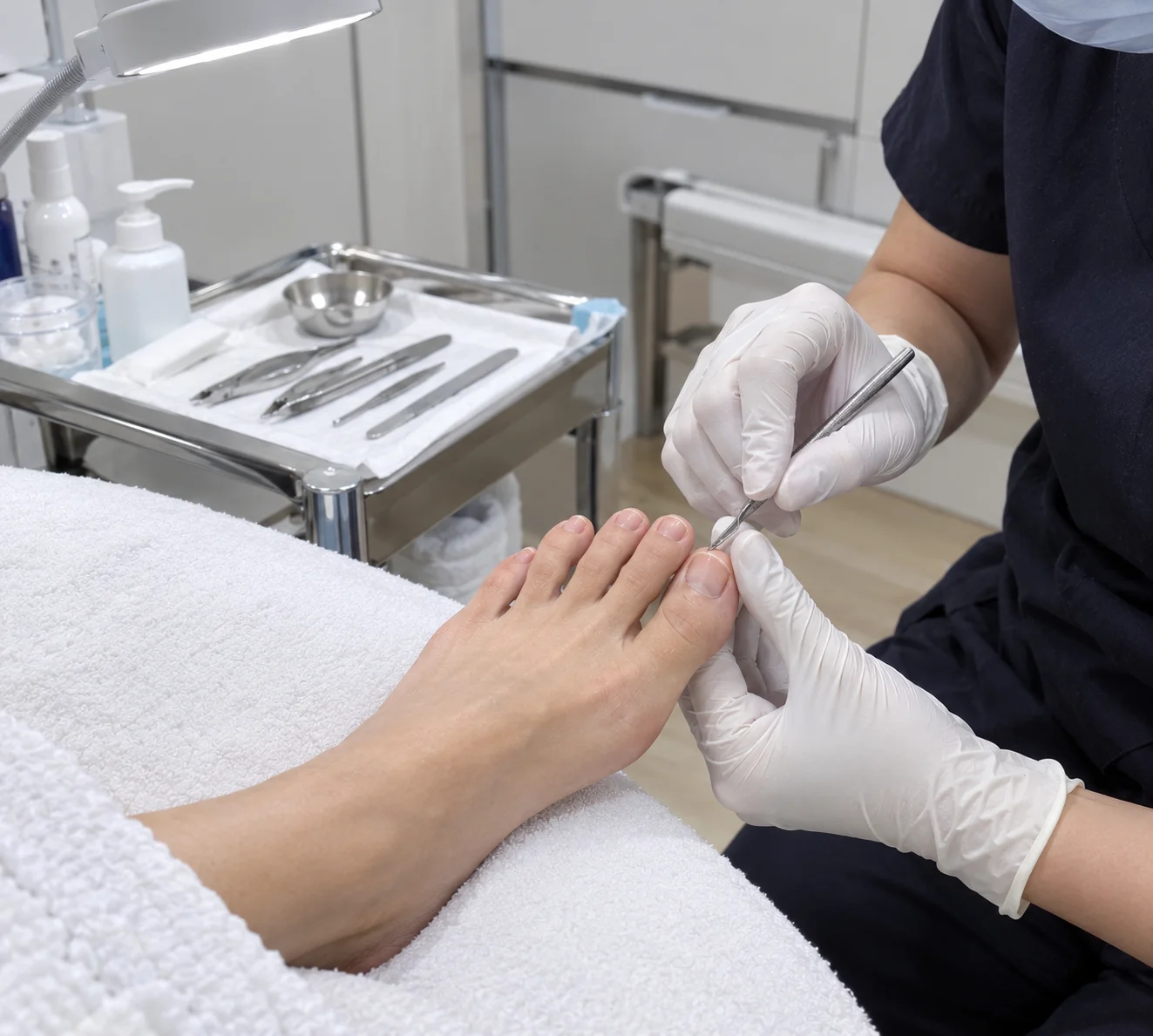
Who Benefits Most from a Medical Pedicure
While anyone who wants well-maintained feet benefits from a medical pedicure, certain groups benefit most from the clinical safety and diagnostic capability it provides.
People with diabetes. Diabetic foot care requires particular caution. Reduced sensation (neuropathy) means cuts, pressure injuries, and infections may not be felt. Reduced circulation means wounds heal slowly and infections escalate quickly. A podiatrist assesses circulation and sensation before beginning, adapts the treatment to the patient’s risk level, and uses sterilised instruments that eliminate cross-contamination risk. A salon pedicure on a diabetic foot carries risks that a medical pedicure eliminates.
People with fungal nail infections. Fungal nails are thickened, discoloured, and brittle. A podiatrist can diagnose the infection (confirming it is fungal rather than trauma-related), reduce the thickened nail painlessly with a medical burr, and recommend or prescribe antifungal treatment. A salon cannot diagnose the infection and may spread it to other nails or other clients through inadequately sterilised instruments.
People with recurring ingrown toenails. A medical pedicure includes assessment of the nail’s growth pattern and trimming technique that reduces the risk of the nail growing into the surrounding skin. If an ingrown toenail is identified during the appointment, the podiatrist can treat it immediately rather than referring elsewhere.
People with calluses and corns that keep returning. Recurring calluses indicate a biomechanical issue: the foot is loading unevenly, and the skin thickens at pressure points as a protective response. A podiatrist removes the callus with a scalpel (painlessly and precisely) and then assesses the underlying cause. Custom orthotics or a footwear assessment may be recommended to address the pressure pattern and reduce recurrence. For the full callus management approach, read how to fix calluses on feet.
People on blood thinning medication. Blood thinners increase bleeding risk from even minor nicks or cuts. A podiatrist’s clinical training and instrument precision minimises this risk. If bleeding does occur, the clinical setting has the supplies and protocols to manage it immediately.
People with circulation problems. Poor circulation in the feet and legs (from peripheral vascular disease, diabetes, or other conditions) means the feet heal slowly from any injury. A podiatrist assesses circulation before beginning and adapts the treatment accordingly. Aggressive filing or cutting on feet with compromised circulation can create wounds that take weeks or months to heal.
Older adults. Reduced flexibility, thickened nails from decades of use, and age-related changes in skin and circulation all make professional foot care more important and home foot care more difficult. A medical pedicure maintains foot health safely and comfortably.
Anyone who values clinical safety. Even healthy adults without specific foot conditions benefit from the sterilisation standards, clinical expertise, and diagnostic capability of a medical pedicure. The infection risk from shared instruments, foot baths, and non-clinical environments in some salons is eliminated in a podiatry clinic.
What Happens If Foot Problems Are Found During the Appointment
One of the most valuable aspects of a medical pedicure is that if your podiatrist identifies a condition during the treatment, they can diagnose and often treat it in the same appointment or arrange the appropriate next step.
Fungal nail infection identified: The podiatrist confirms the diagnosis, reduces the thickened nail, and discusses treatment options (topical antifungal, oral medication referral, or ongoing management through regular medical pedicures).
Ingrown toenail identified: If minor, the podiatrist can treat it during the appointment by carefully clearing the ingrown edge. If significant, an ingrown toenail procedure can be booked as a follow-up.
Biomechanical cause of calluses identified: The podiatrist removes the callus and discusses whether custom orthotics or a footwear assessment would reduce recurrence by addressing the underlying pressure pattern.
Skin condition identified (tinea, dermatitis, warts): The podiatrist diagnoses the condition and provides or recommends appropriate treatment.
Circulation or sensation concerns identified: The podiatrist discusses the findings with the patient and recommends further investigation (vascular assessment, GP referral) if warranted. For diabetic patients, the findings are incorporated into their ongoing diabetic foot management plan.
In a salon, every one of these scenarios results in a referral to a separate practitioner. In a medical pedicure, most are resolved within the same clinical relationship.
How Often Should You Have a Medical Pedicure
The recommended frequency depends on your foot health and your conditions.
| Patient Profile | Recommended Frequency | Why |
|---|---|---|
| General maintenance (healthy feet, no specific conditions) | Every 6 to 8 weeks | Maintains nail health, prevents callus buildup, catches emerging issues early |
| Diabetic patients | Every 4 to 6 weeks | Regular monitoring of circulation, sensation, skin integrity, and nail condition. Prevents complications. |
| Patients with fungal nails | Every 4 to 6 weeks during treatment | Regular nail reduction and monitoring of treatment progress |
| Recurring calluses or corns | Every 6 to 8 weeks | Prevents painful buildup between appointments. Combined with orthotic therapy to address the cause. |
| Older adults with thickened nails | Every 6 to 8 weeks | Thickened nails are difficult to manage at home. Regular professional reduction prevents discomfort and ingrown nails. |
| Athletes and runners | Every 6 to 8 weeks | Manages calluses, blisters, nail trauma, and prevents issues that affect training. Combined with sports podiatry as needed. |
Contact Sydney Foot Doctor to book a medical pedicure at any of our eight Sydney clinics.