
Why Diabetes Makes Your Feet Vulnerable
Diabetes affects the feet in two primary ways, and understanding both is essential for effective prevention.
The first is peripheral neuropathy, which is nerve damage caused by prolonged high blood sugar levels. Over time, the nerves in the feet lose their ability to transmit sensation accurately. This means you may not feel a blister forming from a tight shoe, a small cut from stepping on something sharp, a burn from hot water, or even the pressure of a stone inside your shoe. Without pain as a warning system, minor injuries go unnoticed and untreated, giving them time to deteriorate into open wounds.
The second is peripheral vascular disease, which is reduced blood flow to the feet and lower legs. Healthy blood circulation is what delivers oxygen, nutrients, and immune cells to heal wounds. When circulation is compromised, even a small cut or blister heals much more slowly than it would in a person without diabetes. This slower healing creates a window where infection can take hold, and once infection enters a wound on a poorly circulated foot, the situation can escalate quickly.
When neuropathy and vascular disease are present together, the combination is particularly dangerous. You cannot feel the injury forming, and your body cannot heal it efficiently once it does. This is why prevention, rather than treatment after the fact, is the foundation of diabetic foot care.
How Diabetic Foot Ulcers Actually Form
Foot ulcers rarely appear out of nowhere. They follow a predictable pattern that, once understood, becomes much easier to interrupt.
It typically begins with a source of pressure or friction. This might be a poorly fitting shoe rubbing against the side of a toe, a seam inside a sock pressing against the ball of the foot, a callus building up on a pressure point, or even the repetitive impact of walking with an abnormal gait pattern caused by joint stiffness or foot deformity.
In a person with normal sensation, this pressure would cause discomfort long before any damage occurs. They would adjust the shoe, change their socks, or shift their weight. In a person with diabetic neuropathy, the pressure goes unnoticed. A blister forms beneath the callus. The blister breaks down into an open wound. The wound becomes colonised with bacteria. Infection develops. If circulation is poor, the infection spreads faster than the body can fight it.
This entire cascade, from initial pressure to serious complication, can unfold over days or weeks without the person feeling any pain at all. That is why daily foot checks and regular professional assessments are not optional for people with diabetes. They are essential.
Daily Foot Care Habits That Prevent Ulcers
The most effective prevention happens at home, every single day. These habits take only a few minutes but can prevent complications that lead to hospitalisation.
Check your feet every day. This is the single most important habit. Look at the tops, bottoms, sides, and between every toe. Use a mirror or ask a family member to help if you cannot see the bottoms clearly. You are looking for any redness, swelling, blisters, cuts, cracks, discolouration, warmth in one area compared to the other, or changes in skin texture. If you notice anything new or unusual, do not wait to see if it improves on its own. Book an appointment with your podiatrist.
Wash and dry your feet carefully. Wash daily with lukewarm water (never hot, as neuropathy means you may not feel a burn). Do not soak your feet for long periods, as this softens the skin excessively and increases the risk of breakdown. Dry thoroughly, especially between the toes, because trapped moisture creates an environment where fungal infections thrive. Fungal nail infections are a common complication in diabetic feet and should be treated promptly.
Moisturise the skin, but not between the toes. Diabetic skin tends to be dry and prone to cracking, especially on the heels. Apply a urea-based moisturiser daily to keep the skin supple and prevent fissures that can become entry points for infection. Avoid moisturising between the toes, where excess moisture promotes fungal growth.
Never walk barefoot. Even inside your own home, always wear protective footwear. A small object on the floor, a rough surface, or even a stubbed toe can cause an injury you do not feel. Protective slippers or indoor shoes with a closed toe provide a basic barrier.
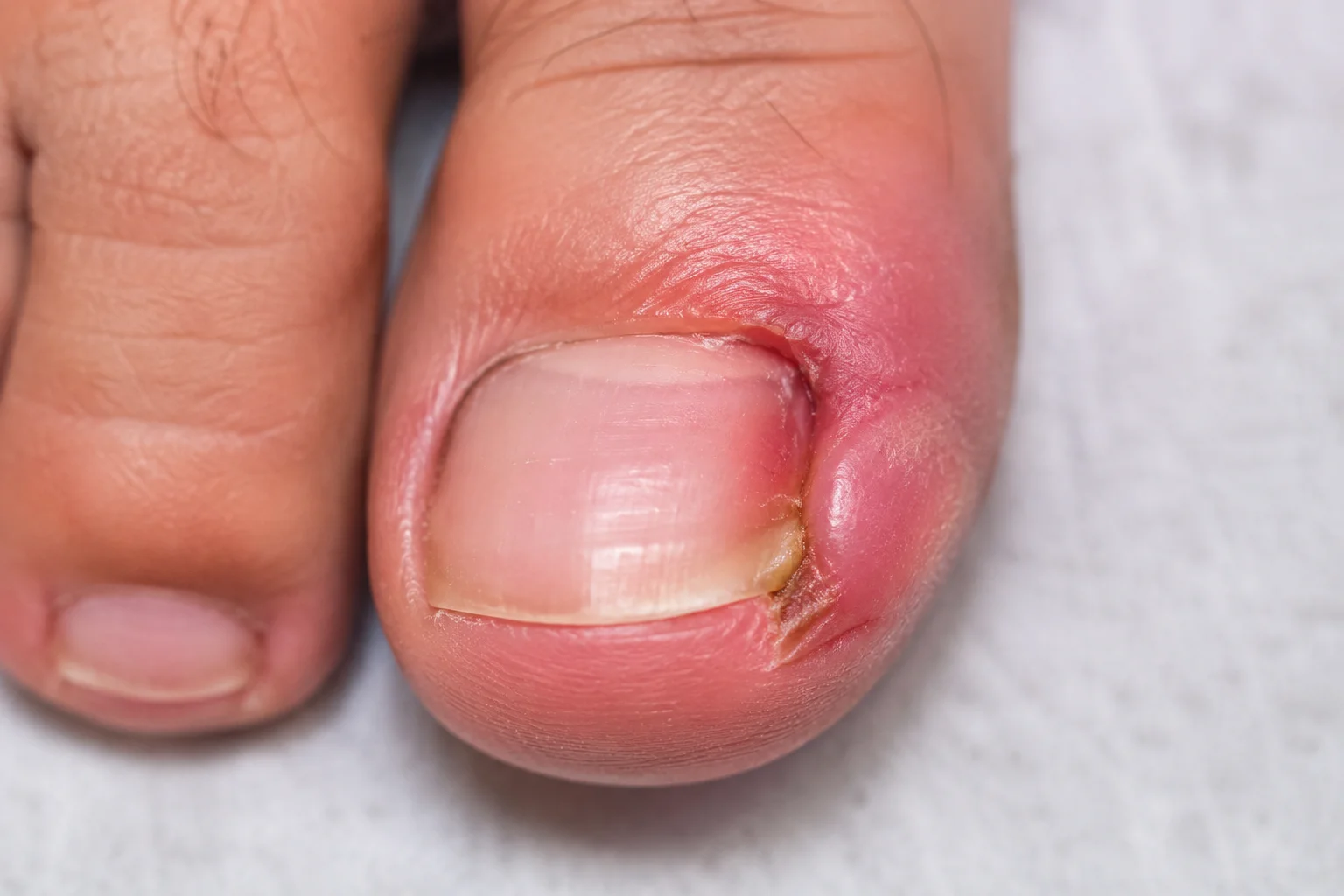
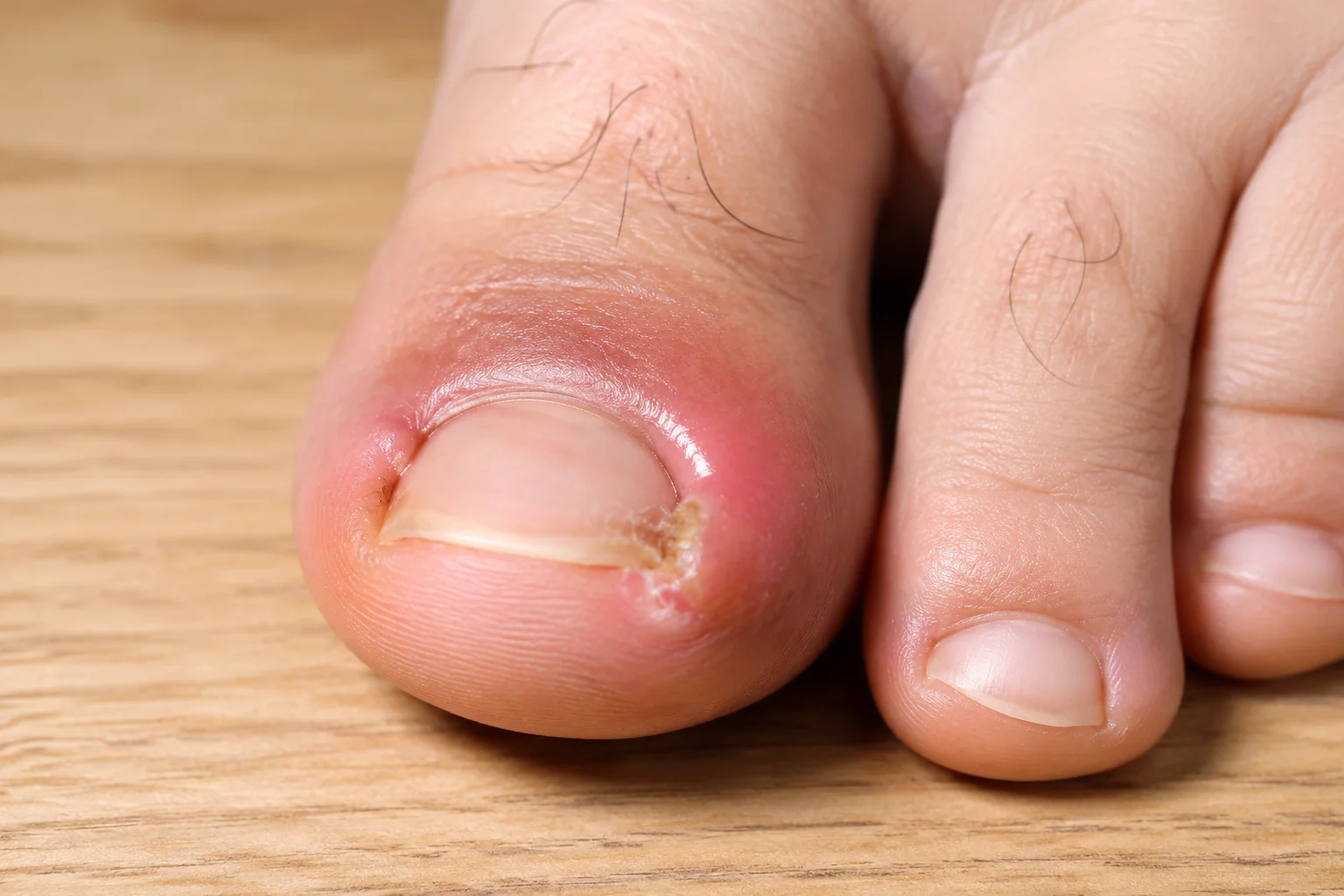
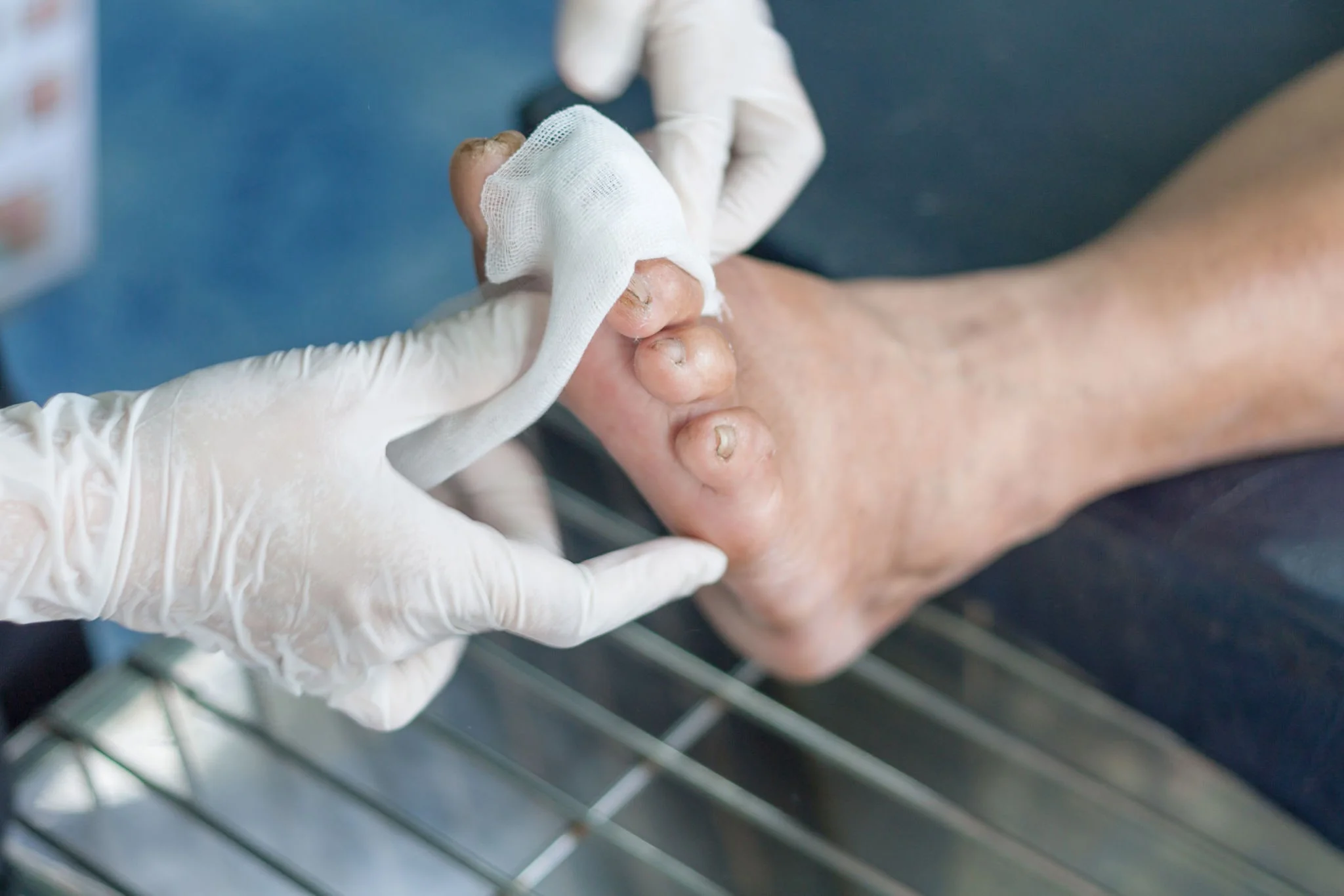
Cut nails carefully. Trim toenails straight across, not too short, and file any sharp edges gently. Do not cut into the corners, as this increases the risk of ingrown toenails which can become infected more easily in diabetic feet. If you are unsure about cutting your own nails safely, a professional medical pedicure provides clinical-grade nail and skin care in a sterile environment.
Do not treat calluses or corns yourself. Over-the-counter corn plasters, medicated pads, and sharp instruments used at home are a common cause of diabetic foot wounds. The chemicals in corn plasters can burn diabetic skin, and cutting calluses without proper training risks cutting too deep. Leave callus and corn management to your podiatrist.
Footwear: The Most Underestimated Prevention Tool
Footwear is responsible for the majority of diabetic foot ulcers. Shoes that are too tight, too loose, poorly cushioned, or have rough internal seams create the friction and pressure that starts the ulcer cascade described above.
The right footwear for a diabetic foot should have a wide, deep toe box that does not compress the toes, a firm but cushioned sole that absorbs impact and distributes pressure evenly, a seamless or smooth internal lining with no stitching or ridges that could rub against the skin, a secure fastening (laces, velcro, or buckle) that holds the foot in place without pressure points, and a supportive structure that does not allow the foot to slide around inside the shoe.
A professional footwear assessment from a podiatrist evaluates your current shoes, identifies any that are contributing to pressure or friction, and recommends alternatives that suit your foot shape and risk level. In some cases, custom orthotics are prescribed to redistribute pressure away from vulnerable areas of the sole, particularly under the metatarsal heads and heel where ulcers most commonly develop.
“The most common thing we see in our diabetic foot assessments is a patient wearing shoes that are the wrong size or shape for their feet. They have been wearing the same style for years and do not realise that their foot shape has changed as they have aged. A simple shoe change can reduce ulcer risk dramatically.”
What a Diabetic Foot Assessment Involves
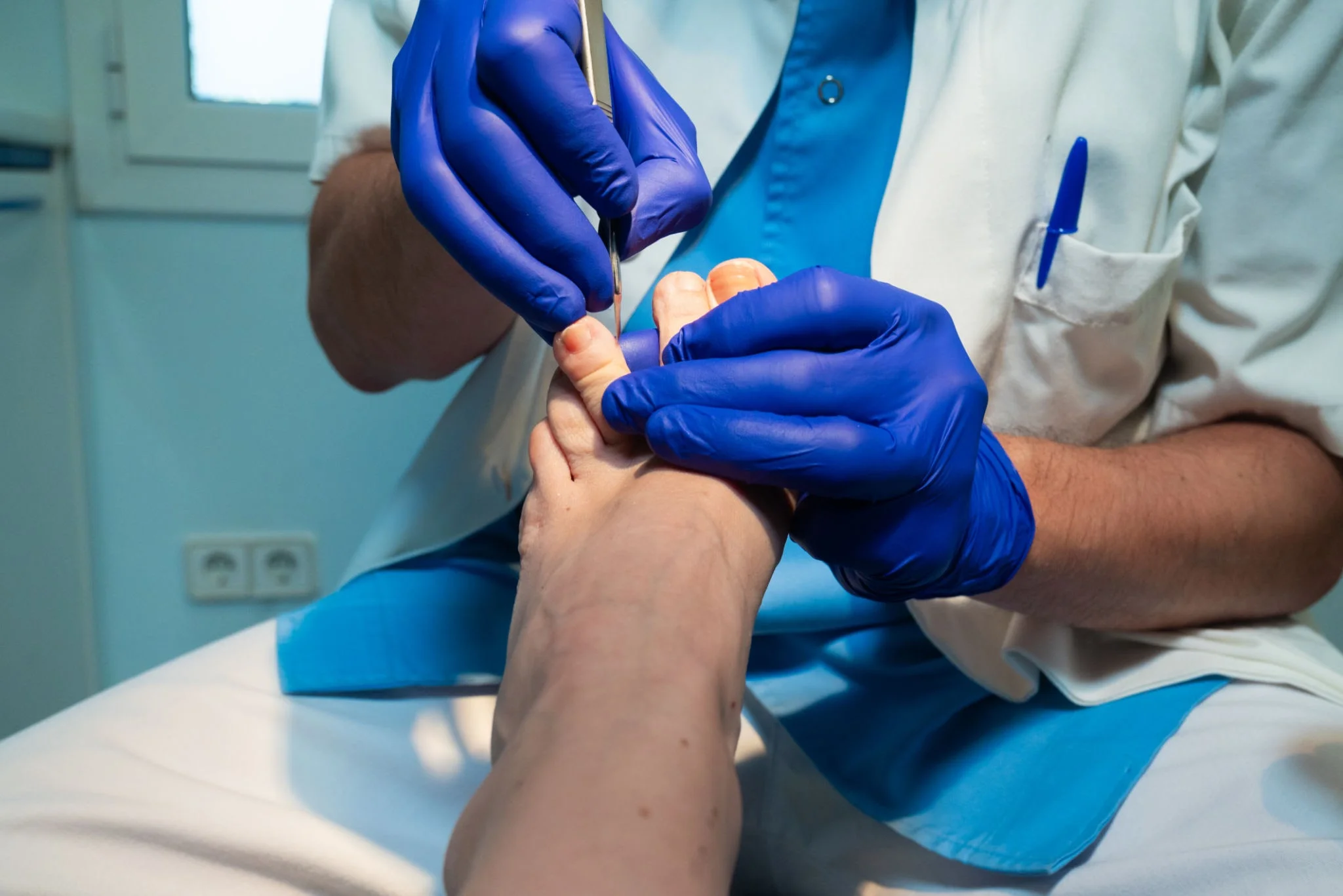
A podiatric diabetic foot assessment is a structured clinical evaluation that identifies your current risk level and creates a management plan to prevent complications. At Sydney Foot Doctor, this assessment covers several key areas.
Neurological testing checks the sensation in your feet using a monofilament (a fine nylon filament pressed against specific points on the sole) and a tuning fork (to assess vibration perception). These tests determine whether neuropathy is present and how advanced it is.
Vascular assessment evaluates blood flow to the feet by checking pedal pulses (the pulses you can feel on the top of the foot and behind the ankle) and assessing skin colour, temperature, and capillary refill time. If circulation concerns are identified, your podiatrist may recommend further investigation with your GP or a vascular specialist.
Skin and nail assessment examines the condition of the skin across the entire foot, looking for calluses, cracks, dry patches, fungal infections, blisters, discolouration, and any pre-ulcerative changes. Nails are checked for thickening, fungal infection, ingrowth, and trauma.
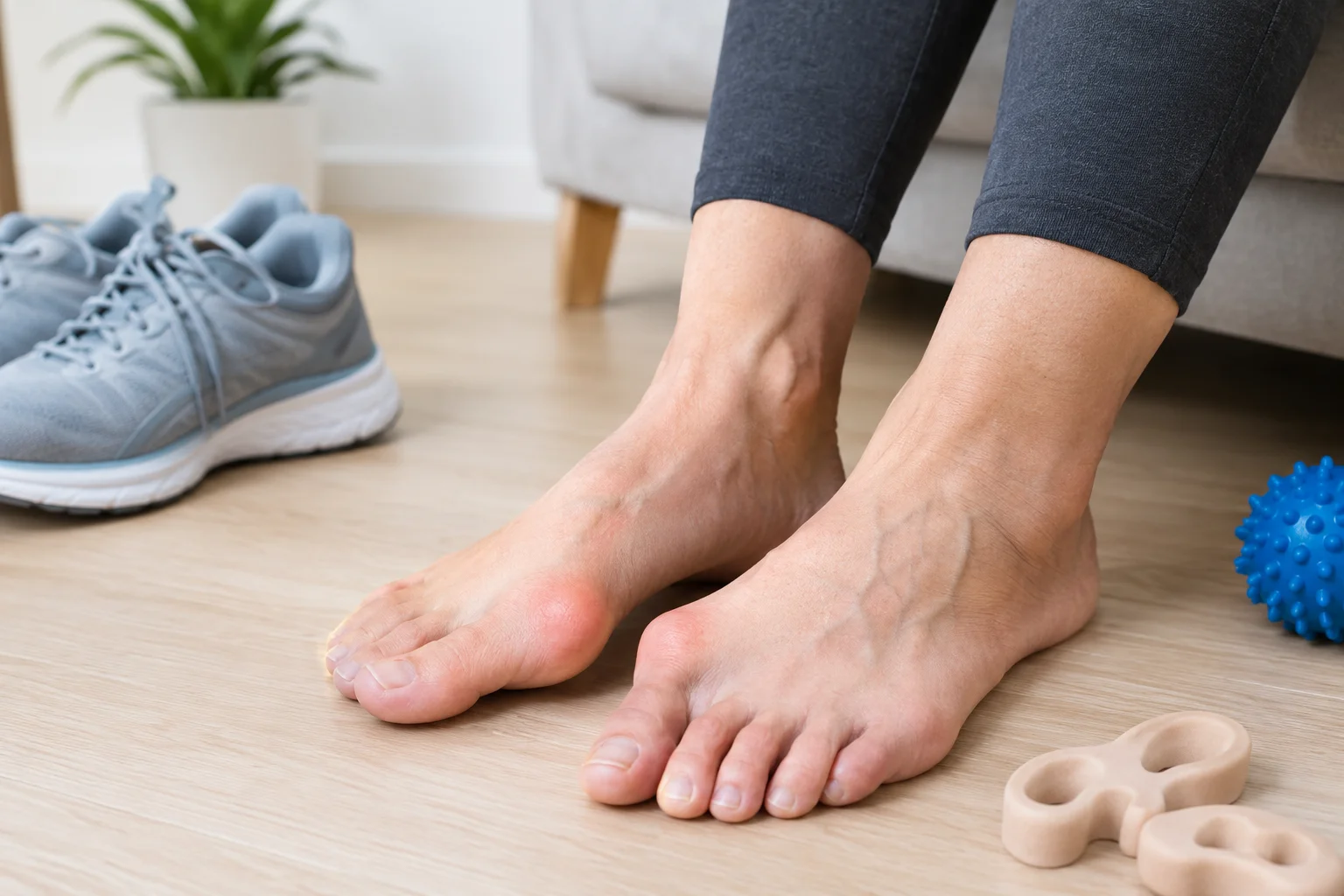
Musculoskeletal assessment evaluates foot structure, joint mobility, toe deformities (such as hammer toes or bunions), and gait patterns. Structural abnormalities create predictable pressure points where ulcers are most likely to develop. Orthotic therapy can address many of these biomechanical risk factors.
Footwear review assesses your current shoes for fit, support, internal wear patterns, and suitability for your foot type and risk level.
Risk classification categorises your feet into a risk category (low, intermediate, or high) based on the combined findings. This classification determines how frequently you should be reviewed: annually for low risk, every three to six months for intermediate, and every one to three months for high risk.
Risk Factors That Increase Your Chance of Developing an Ulcer
Not every person with diabetes has the same level of foot risk. The following factors increase your vulnerability.
| Risk Factor | Why It Matters |
|---|---|
| Peripheral neuropathy (loss of sensation) | You cannot feel injuries forming, so they go unnoticed and untreated |
| Peripheral vascular disease (poor circulation) | Wounds heal slowly, giving infection more time to develop |
| Previous foot ulcer | Having had one ulcer significantly increases the risk of developing another |
| Foot deformity (bunions, hammer toes, Charcot foot) | Creates abnormal pressure points where skin is more likely to break down |
| Callus buildup on pressure points | Calluses increase pressure underneath, and blisters can form beneath them |
| Poor blood sugar control (high HbA1c) | Sustained high blood sugar accelerates nerve damage and impairs healing |
| Smoking | Further reduces circulation to the feet and impairs wound healing |
| Vision impairment | Makes it harder to perform daily foot checks and spot early changes |
| History of amputation | Altered gait and increased pressure on the remaining foot raises risk |
If two or more of these apply to you, regular podiatry reviews are essential. The frequency should be discussed with your podiatrist based on your individual risk classification.
When to See a Podiatrist Immediately
Certain changes require urgent professional attention. Do not wait for your next scheduled appointment if you notice any of the following.
Any open wound, cut, or blister that is not healing within a few days needs assessment. Redness, warmth, or swelling around a wound suggests infection is developing. Any discharge (clear fluid, pus, or blood) from a wound needs clinical evaluation. A sudden change in skin colour (darkening, whitening, or blue-black discolouration) may indicate circulation compromise. An unusual smell from a wound or from between the toes can signal infection. Pain in a foot that normally has reduced sensation is a warning sign that something significant is happening. Any new callus, corn, or area of hard skin forming on a pressure point should be managed professionally rather than at home.
Sydney Foot Doctor has eight clinics across Sydney, all located inside medical centres for convenient access. View all locations to find the clinic closest to you and book a diabetic foot assessment.