What Makes a Sports Podiatrist Different From a General Podiatrist
All sports podiatrists are qualified podiatrists. The difference is in the focus. A general podiatrist treats the full range of foot conditions, from skin and nail problems to diabetic foot care and general pain. A sports podiatrist narrows that scope to injuries and biomechanical issues that arise from physical activity.
The distinction matters because sports injuries rarely happen in isolation. A runner with heel pain may have a biomechanical issue at the ankle, knee, or hip that is placing excessive load on the plantar fascia. Treating the heel alone provides short-term relief, but the pain returns once training resumes because the underlying cause was never addressed. A sports podiatrist looks at the whole movement chain, from the ground up, to identify not just what hurts but why it hurts.
This approach involves understanding training loads (how much, how fast, and how often someone is training), the surfaces they train on, the footwear they use, and the biomechanics of how their feet and legs absorb and transfer force during movement.
What a Sports Podiatrist Actually Does
Biomechanical Assessment
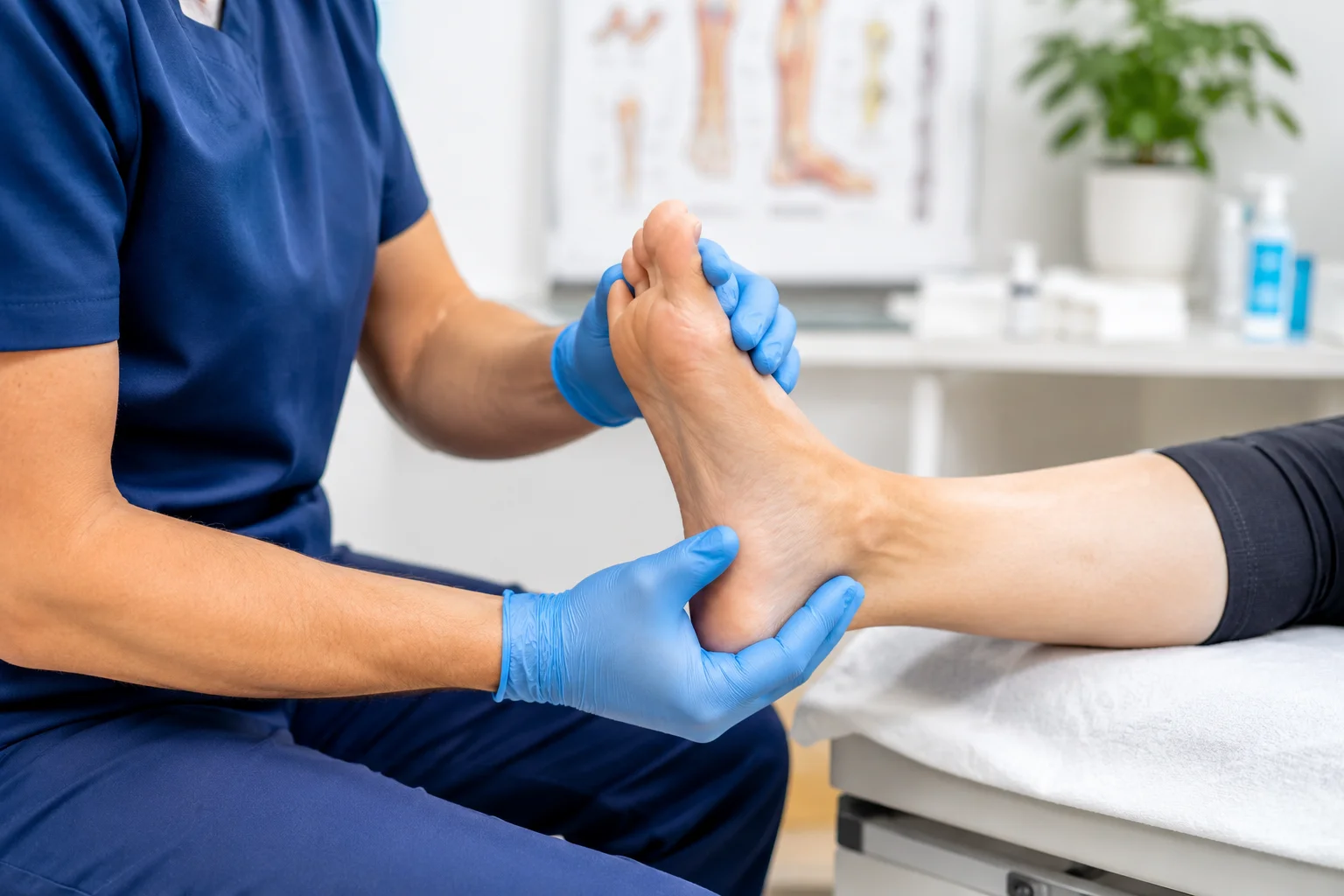
A biomechanical assessment is the foundation of sports podiatry. It evaluates how your feet, ankles, knees, and hips function during movement. The podiatrist assesses joint range of motion, muscle strength, foot posture, and alignment in both static (standing) and dynamic (walking and running) positions.
This assessment identifies structural and functional issues such as overpronation (feet rolling inward excessively), supination (feet rolling outward), leg length discrepancies, tight calf muscles, weak glute activation, and limited ankle dorsiflexion. Any of these can create abnormal loading patterns that lead to injury under the repetitive stress of sport.
Gait Analysis
Gait analysis takes the biomechanical assessment into real-world movement. The podiatrist observes or records you walking and running to identify how your foot strikes the ground, how it moves through the stance phase, and how force is distributed across the foot and up through the leg.
Modern gait analysis may use video recording, pressure plate technology, or treadmill observation to capture movements that happen too fast for the naked eye. The findings guide treatment decisions, including whether orthotics are needed, what type of shoe is appropriate, and which muscles need strengthening or stretching.
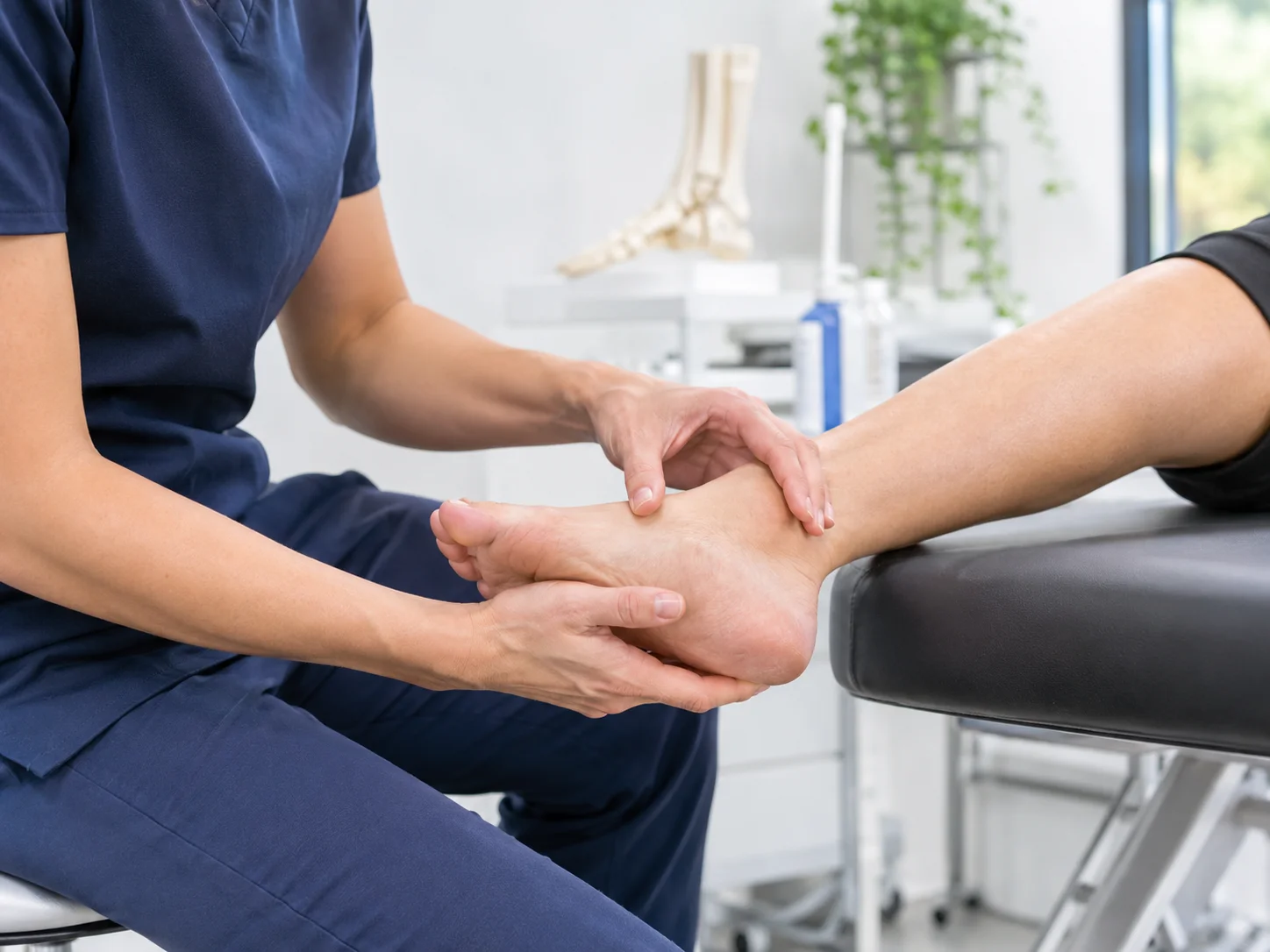
Injury Diagnosis and Treatment
Sports podiatrists diagnose and treat the injuries most commonly caused by sport and physical activity, including:
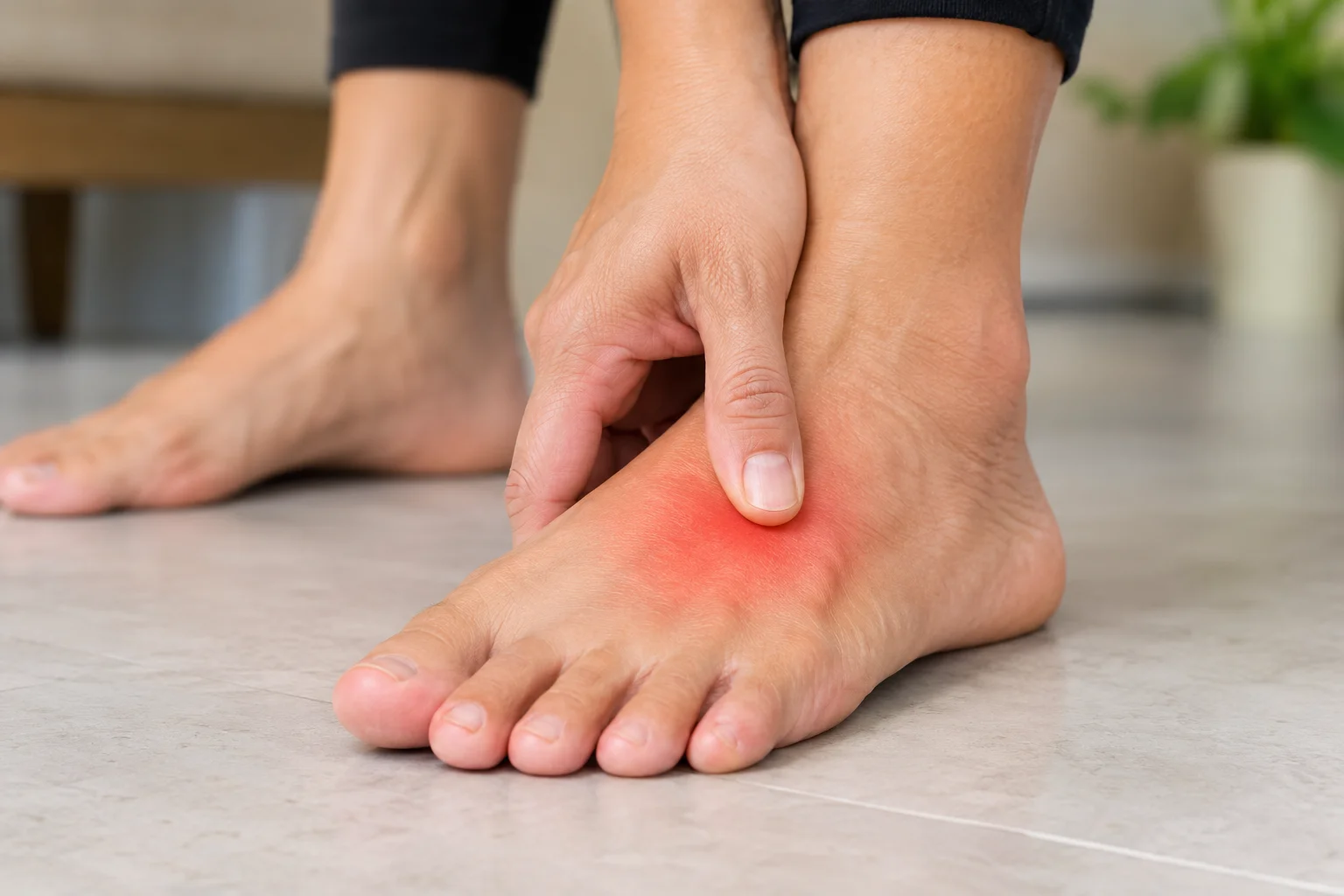
Plantar fasciitis and heel pain. The most common running injury seen in podiatry. Pain on the underside of the heel, typically worst with the first steps in the morning or after sitting. Caused by overload of the plantar fascia, often linked to training volume increases, inadequate footwear, or biomechanical factors like flat feet or tight calves.
Achilles tendinopathy. Pain and stiffness in the Achilles tendon, usually at the mid-portion or at the insertion point on the heel bone. Common in runners, basketball players, and sports involving jumping and sprinting. A sports podiatrist manages this with load modification, eccentric strengthening programs, footwear adjustment, and in some cases shockwave therapy or dry needling.
Stress fractures. Small cracks in the bones of the foot caused by repetitive loading rather than a single impact. The metatarsals (forefoot bones) and the calcaneus (heel bone) are the most common sites. If you are experiencing stress fracture symptoms, early diagnosis and load management are critical to prevent a complete fracture.
Shin splints (medial tibial stress syndrome). Pain along the inner edge of the shinbone during and after running. Often related to overpronation, inadequate footwear, sudden increases in training volume, or running on hard surfaces. Treatment addresses the biomechanical cause alongside load management.
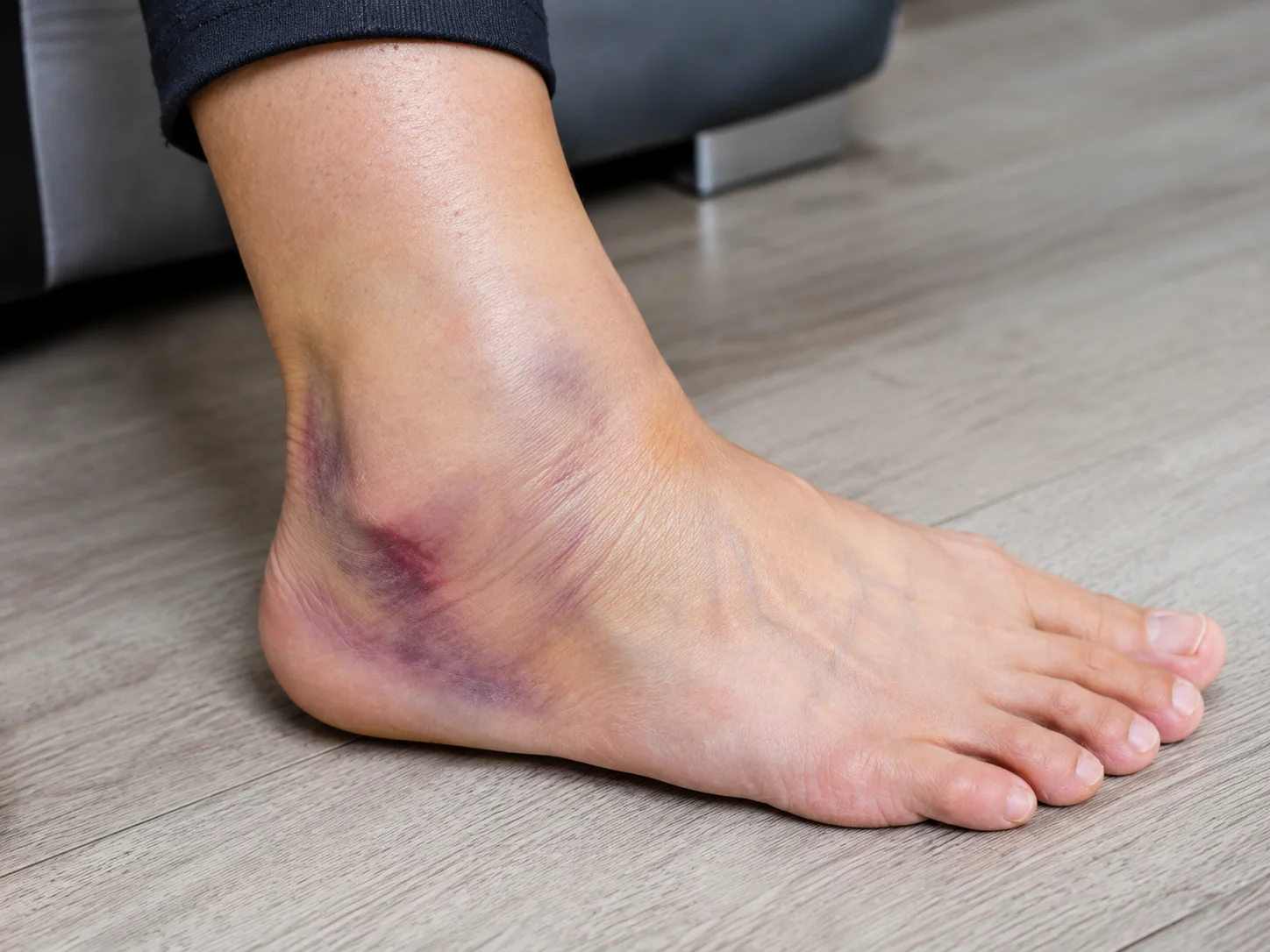
Ankle sprains and instability. Acute ankle sprains are one of the most common sporting injuries. A sports podiatrist manages the initial injury and, critically, addresses the residual weakness and instability that make re-injury likely without proper rehabilitation.
Forefoot pain and neuromas. Pain, numbness, or burning in the ball of the foot, sometimes caused by a Morton’s neuroma (a thickened nerve between the toes). Often aggravated by tight footwear, high-impact activities, and abnormal forefoot loading during push-off.
Knee and hip pain originating from the foot. Pain at the knee (patellofemoral syndrome, ITB syndrome) or hip is frequently linked to foot and ankle biomechanics. Abnormal pronation, poor foot control, and muscle imbalances in the lower leg can alter the loading pattern all the way up the chain. A sports podiatrist identifies when the foot is the driver of pain felt elsewhere.
Footwear Assessment and Recommendations
The shoe you train and compete in has a direct impact on injury risk. A sports podiatrist assesses whether your current footwear is appropriate for your foot type, your sport, and your biomechanics. This goes beyond “stability vs neutral”. The podiatrist evaluates heel drop, toe box width, sole flexibility, cushioning, wear patterns, and whether the shoe matches the surface you play on. Read our full guide on what a footwear assessment involves.
Custom Orthotics and Sports Insoles
When biomechanical correction is needed, a sports podiatrist may prescribe custom orthotics or sports insoles. These are not the generic insoles you buy from a chemist. They are devices prescribed and designed based on your individual biomechanical assessment, cast or scanned from your feet, and built to address the specific loading issues identified in your gait analysis.
Sports insoles differ from general orthotics because they are designed to fit inside sports shoes (which have different internal volumes and heel drops from everyday shoes) and to withstand the higher forces generated during running, jumping, and lateral movement.
Rehabilitation Programs
A sports podiatrist does not just treat the injury and send you on your way. They design rehabilitation programs that include stretching, strengthening, proprioception (balance) training, and graduated return-to-sport protocols. The goal is not just to eliminate pain but to address the underlying weakness or imbalance so the injury does not recur when you return to full training.
Shockwave Therapy, Dry Needling, and Injections
For conditions that do not respond adequately to conservative treatment, a sports podiatrist may use laser therapy, shockwave therapy, dry needling, or injection therapy. These are adjunct treatments used alongside rehabilitation, not replacements for it.
Who Should See a Sports Podiatrist
You do not need to be an elite or professional athlete. A sports podiatrist treats anyone whose foot, ankle, or lower limb pain is related to physical activity. Common patients include:
- Runners of all levels, from beginners to marathon competitors
- Gym-goers experiencing foot or ankle pain during squats, deadlifts, or plyometrics
- Social sport players (football, netball, basketball, cricket, tennis)
- Weekend hikers and bushwalkers with recurring foot fatigue or pain
- Children and adolescents with growing pains or foot and leg pain related to sport
- Anyone returning to exercise after a break who is experiencing pain they did not have before
- Walkers covering significant distances who are developing foot pain or arch pain
When to Book After a Sports Injury
Knowing when to rest and when to seek professional help is the difference between a minor setback and a months-long layoff. Book an appointment with a sports podiatrist when:
Pain persists beyond 48 to 72 hours. Muscle soreness from a hard session (DOMS) resolves within a day or two. Pain that is still present after 72 hours, or that is getting worse rather than better, is not normal training soreness. It warrants assessment.
Pain changes the way you move. If you are limping, shortening your stride, avoiding putting weight on one foot, or adjusting your running technique to avoid pain, your body is compensating. Compensation changes your biomechanics and often leads to secondary injuries in the opposite leg, the knee, or the hip.
Pain occurs with specific movements. Pain that appears consistently at the same point during a run (always at the 3km mark, always on hills, always when pushing off) suggests a structural or biomechanical issue that will not resolve with rest alone.
You have recurring injuries. The same injury coming back repeatedly, or alternating between feet, is a clear sign that the underlying cause has not been addressed. A sports podiatrist identifies the biomechanical or training factor driving the recurrence.
You heard or felt something during the injury. A pop, snap, or crack during a sporting moment, followed by immediate pain or swelling, needs professional assessment to rule out a fracture, tendon tear, or ligament rupture. If you are unsure whether your pain could be a stress fracture, do not continue training on it.
You are starting a new sport or increasing training load. Preventive assessment before you ramp up training is the most effective way to identify risk factors and address them before they become injuries. This is particularly valuable for runners training for their first half-marathon or marathon, or anyone returning to sport after a long break.
What to Expect at Your First Appointment
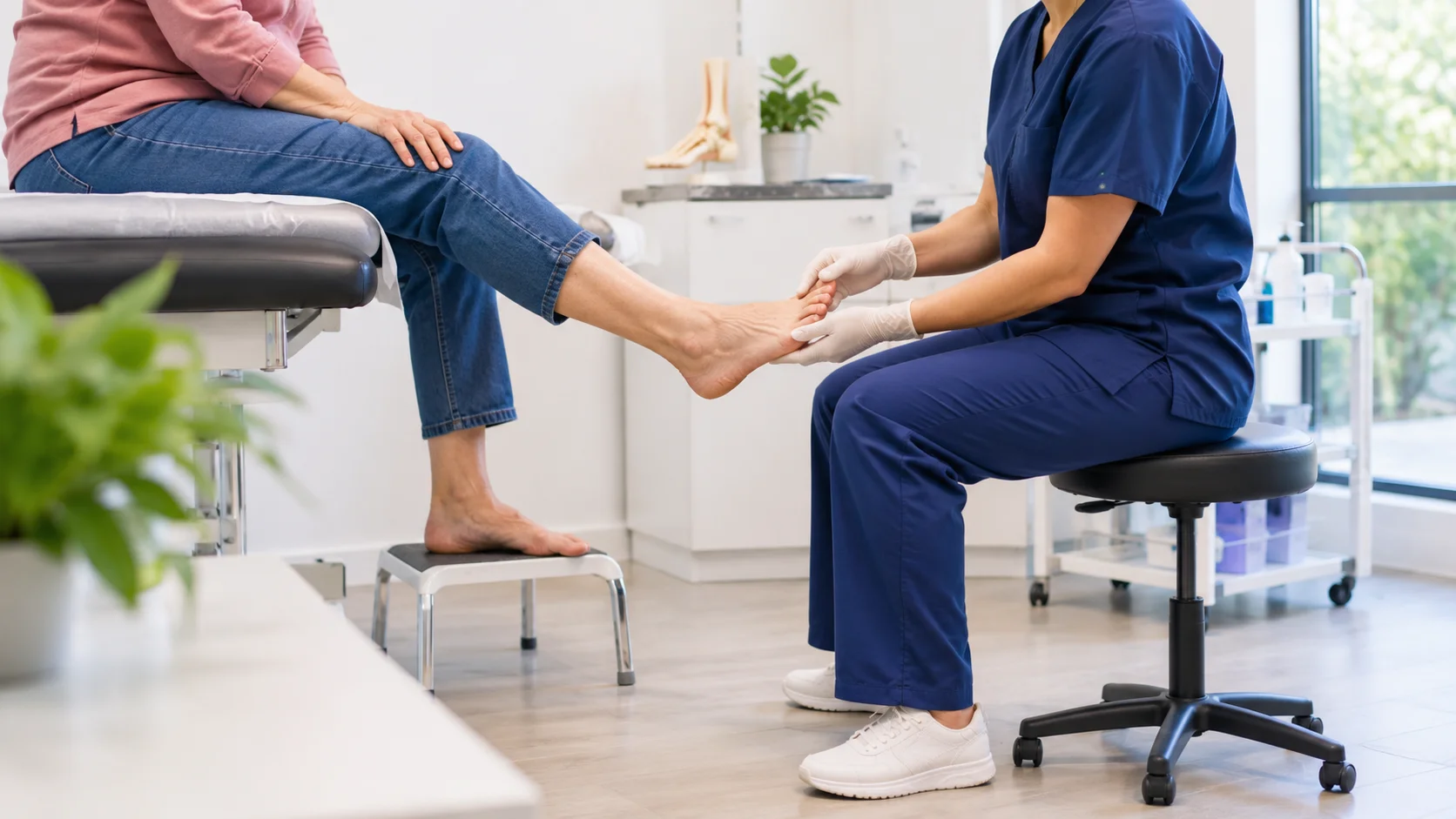
A first appointment with a sports podiatrist at Sydney Foot Doctor typically involves:
- A detailed history of your injury, pain, training routine, footwear, and sporting goals
- A physical examination of the feet, ankles, and lower limbs
- A biomechanical assessment (standing and moving)
- Gait analysis (walking and running observation)
- A diagnosis and explanation of the cause
- A treatment plan that may include immediate pain management, rehabilitation exercises, footwear recommendations, and referral for orthotics or imaging if needed
Most sports podiatry consultations take 30 to 45 minutes because of the assessment component. Bring the shoes you train in and any existing orthotics so the podiatrist can assess them.
Sydney Foot Doctor has eight clinics across Sydney with same-day appointments available. Book online or contact us to see a sports podiatrist near you.