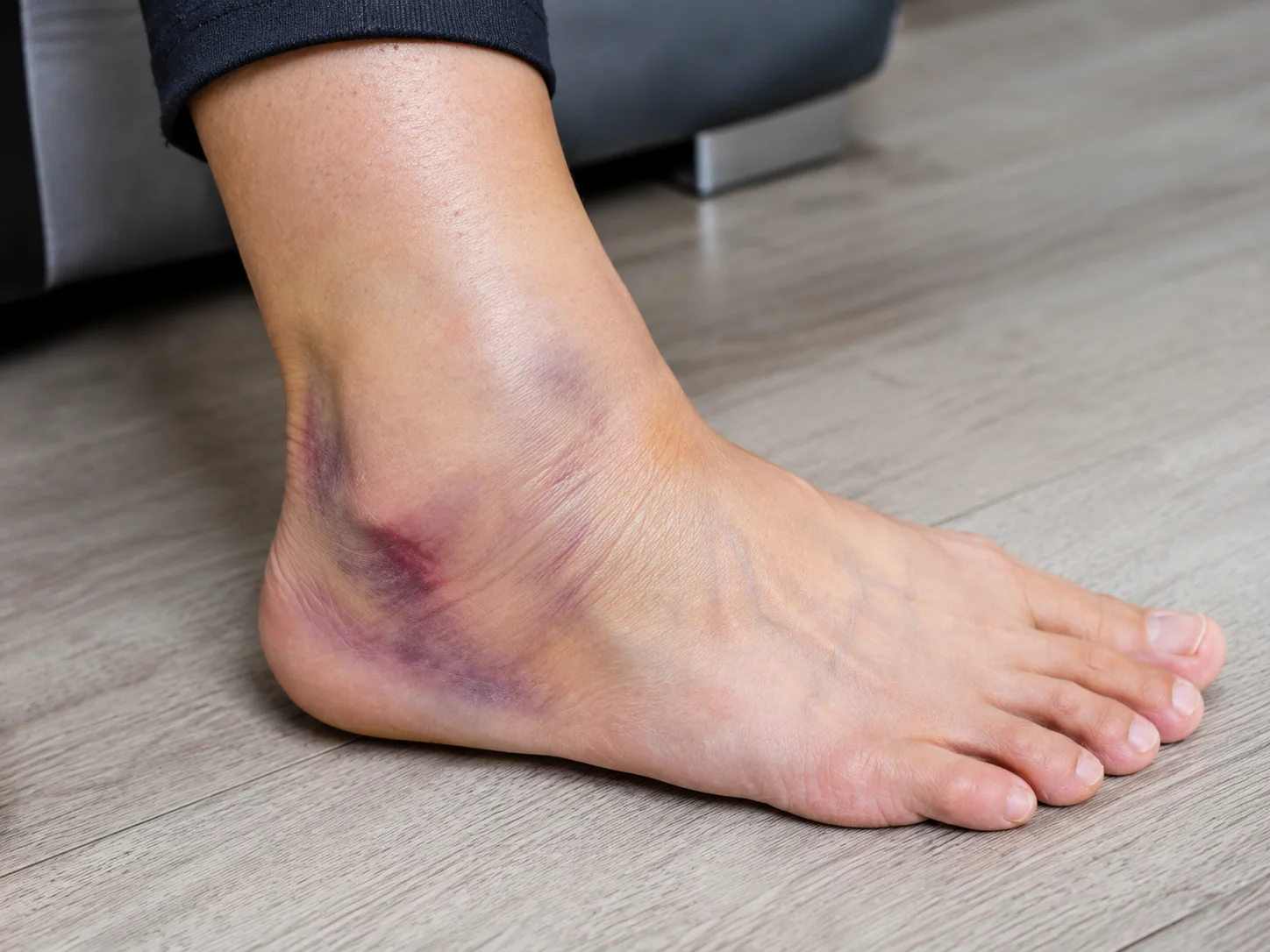
What Is an Ankle Sprain?
An ankle sprain is an injury to the ligaments that hold the ankle bones together. Ligaments are strong bands of tissue that keep the joint stable. When the ankle is forced past its normal range, these ligaments can stretch or tear.
Most sprains happen when the foot rolls inwards, injuring the ligaments on the outside of the ankle. Less often, the ligaments on the inside of the ankle are injured. A “high ankle sprain” affects the ligaments joining the two lower leg bones and usually takes longer to recover.
The Three Grades of Ankle Sprain
| Grade | What it means | Common signs | Typical recovery |
|---|---|---|---|
| Grade 1 (mild) | Ligament stretched, with small fibres torn | Mild pain, little swelling, able to walk | About 1 to 3 weeks |
| Grade 2 (moderate) | Partial tear of the ligament | More swelling and bruising, walking is painful, some looseness | About 3 to 6 weeks |
| Grade 3 (severe) | Complete tear of the ligament | Significant swelling and bruising, hard to put weight on, ankle feels unstable | Several weeks to a few months |
Recovery times vary from person to person. These are general ranges, not a prediction for your ankle.
Common Causes of Ankle Sprains
- Sport: landing from a jump, quick changes of direction or landing on another player’s foot. Ankle sprains are common in netball, basketball, football, soccer and tennis.
- Uneven ground: kerbs, potholes, uneven grass, bush tracks and stairs.
- Footwear: worn-out shoes, high heels, thongs or shoes without enough support for the activity.
- A previous sprain: ligaments that haven’t fully recovered, and reduced balance, make the ankle more likely to roll again.
- Tired or weak muscles: reduced strength and balance around the ankle late in a game or a long day.
The First 48 Hours: What to Do
For most mild to moderate sprains, the first 48 hours are about settling pain and swelling. A simple way to remember it is RICE:
- Rest: avoid activities that cause pain. Use crutches if walking is very painful and you’ve been shown how to use them.
- Ice: apply ice for 15 to 20 minutes every 2 to 3 hours while awake. Wrap it in a cloth and never put it directly on the skin.
- Compression: use a firm, but not tight, elastic bandage. Loosen it if your toes tingle, go numb or change colour.
- Elevation: raise the ankle above the level of your heart when sitting or lying down.
What to Avoid in the First 48 to 72 Hours
Avoid heat (hot showers, heat packs), alcohol, running or sport, and massage. These can increase swelling and bleeding in the injured area. As the pain settles, gentle movement within comfort is usually encouraged rather than keeping the ankle completely still for long periods.
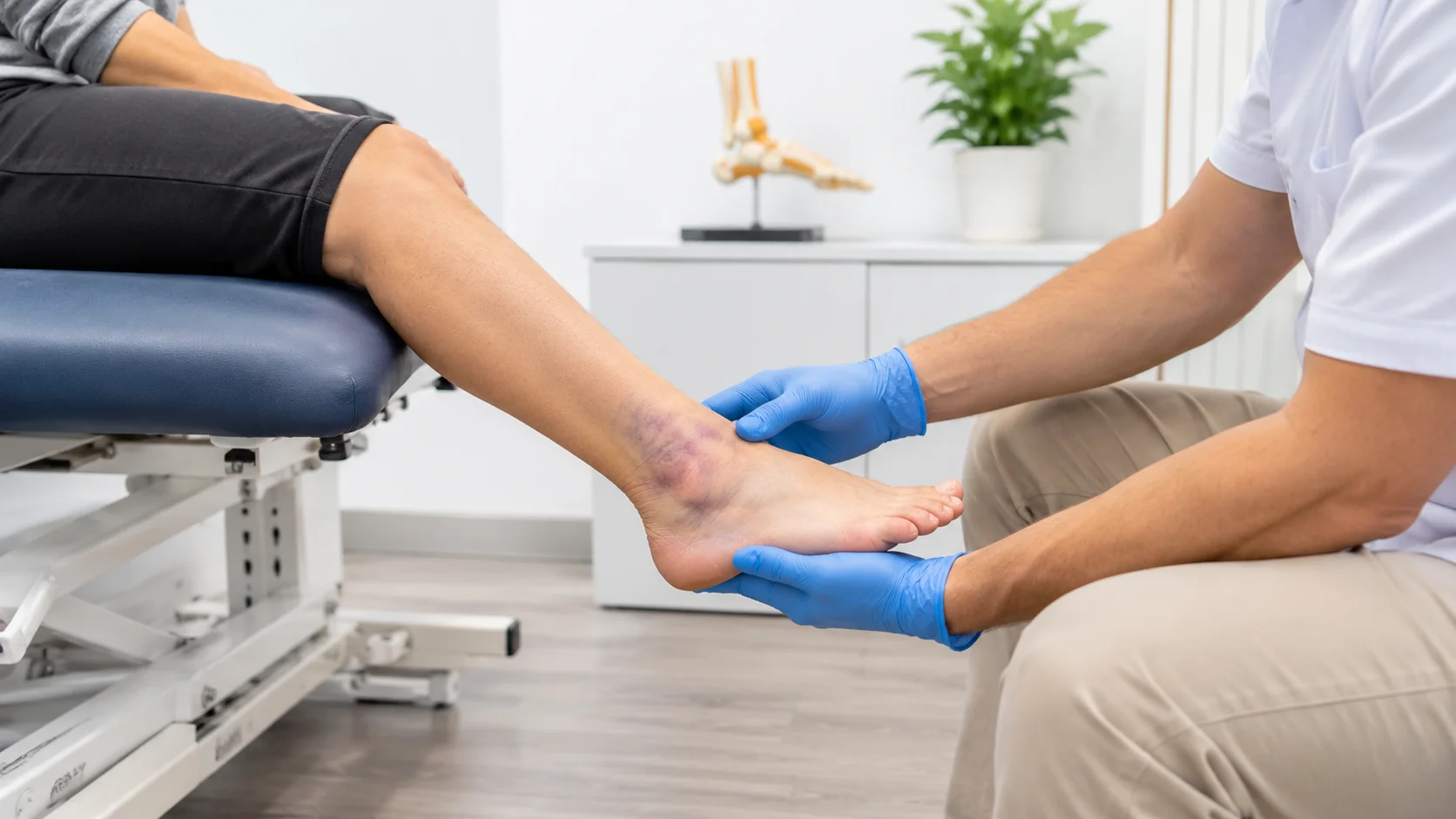
When to See a Podiatrist
Book an appointment with a podiatrist if:
- Pain or swelling isn’t easing after 3 to 5 days
- You still find it hard to walk normally after about a week
- The ankle feels loose, unstable or “gives way”
- You’ve sprained the same ankle before
- You want a clear plan for returning to sport
- You still have stiffness, weakness or pain months after an old sprain
You don’t need a GP referral to see a podiatrist privately.
When to See a GP or Go to Emergency Instead
Get medical care from your GP or an emergency department if:
- You can’t put weight on the foot or take a few steps
- The ankle or foot looks deformed or out of place
- There is severe pain, or tenderness directly over the ankle bones
- You have numbness or tingling, or the foot looks pale, blue or feels cold
- There is an open wound, or the area becomes hot, red and increasingly painful
- The pain is getting worse despite rest
These can be signs of a fracture or another injury that needs an X-ray or urgent treatment. In an emergency, call 000.
How an Ankle Sprain Podiatrist Can Help
A podiatrist looks at the whole picture: how the injury happened, how your ankle moves and how you walk. Care may include:
- Assessment: checking the ligaments, joint stability, swelling and your walking pattern, and referring you for imaging or to your GP if a fracture or more serious injury is suspected.
- Strapping or bracing: support for the ankle in the early stages and when returning to activity.
- Rehabilitation exercises: a staged program to restore movement, strengthen the calf and ankle muscles and retrain balance.
- Footwear advice: making sure your everyday and sports shoes suit your feet and activity. Learn more about a footwear assessment.
- Orthotics where suitable: if your foot posture contributes to the ankle rolling, custom orthotics may help. Not everyone needs them.
- Return to sport: a step-by-step plan so you don’t go back too early. Read more about what a sports podiatrist does or see our sports podiatry page.
Preventing Repeat Sprains
- Finish your rehabilitation exercises, even once the pain has gone
- Practise balance exercises, such as standing on one leg
- Keep your calf and ankle muscles strong
- Warm up properly before sport
- Wear supportive footwear suited to your sport, and replace shoes once they’re worn
- Use strapping or a brace for sport after a sprain if your podiatrist recommends it
- Take extra care on uneven surfaces, especially when tired