What Causes Calluses on Feet
Calluses form where the foot experiences the most repeated pressure or friction. Understanding the cause is essential because it determines the fix.
Footwear is the most common cause. Shoes that are too tight compress the toes and create friction on the sides and tops of the feet. Shoes that are too loose allow the foot to slide inside, creating shear forces on the sole. High heels shift body weight forward onto the ball of the foot, dramatically increasing pressure on the metatarsal heads. Shoes with thin soles provide insufficient cushioning, transferring ground reaction force directly to the skin. A professional footwear assessment identifies which shoes are contributing to the problem and recommends alternatives that eliminate the pressure points.
Biomechanical imbalances cause calluses by shifting weight onto areas of the foot not designed to bear that load. Overpronation (excessive inward rolling during walking) increases pressure on the inner forefoot and big toe. Supination (outward rolling) increases pressure on the outer edge of the foot. High arches concentrate pressure on the heel and ball of the foot. Flat feet distribute pressure unevenly across the sole. Custom orthotics and orthotic therapy correct these imbalances by redistributing pressure evenly across the foot.
Foot deformities alter the foot’s shape and pressure distribution. Bunions create a bony prominence that rubs against shoes. Hammer toes and claw toes create pressure points on the tops and tips of the toes. Prominent metatarsal heads (dropped metatarsals) create concentrated pressure under the ball of the foot. These structural changes mean calluses form in predictable locations directly related to the deformity.
Activity and occupation. People who spend long hours on their feet (nurses, teachers, retail workers, hospitality staff, tradeworkers), runners, and athletes develop calluses from cumulative pressure over thousands of steps and hours of standing. A sports podiatrist addresses activity-specific callus development in athletes.
Absent or inadequate moisturising. Dry skin is less flexible and more prone to cracking and thickening. While dryness alone does not cause calluses (pressure does), dry skin calluses crack more readily, which can become painful and, in patients with diabetes or poor circulation, potentially dangerous.
“Calluses tell us exactly where the foot is under excessive pressure. The location of the callus is a diagnostic clue. A callus under the second metatarsal head tells us the first metatarsal is not bearing its share of the load. A callus on the inner big toe tells us there is likely pronation-related shear. We treat the callus, but we use its location to diagnose and fix what caused it.”
Callus Locations and What Each One Means
Where the callus forms reveals why it formed. This helps your podiatrist target the underlying cause.
| Callus Location | What It Usually Indicates | Common Cause |
|---|---|---|
| Under the ball of the foot (metatarsal heads) | Excessive forefoot pressure | High heels, dropped metatarsals, tight calves, biomechanical imbalance |
| Under the big toe joint | Medial forefoot overload | Overpronation, bunion deformity, hallux limitus (stiff big toe) |
| Under the second or third metatarsal head | Load transfer from an underperforming first metatarsal | First ray hypermobility, Morton’s foot (short first metatarsal), bunion shifting load laterally |
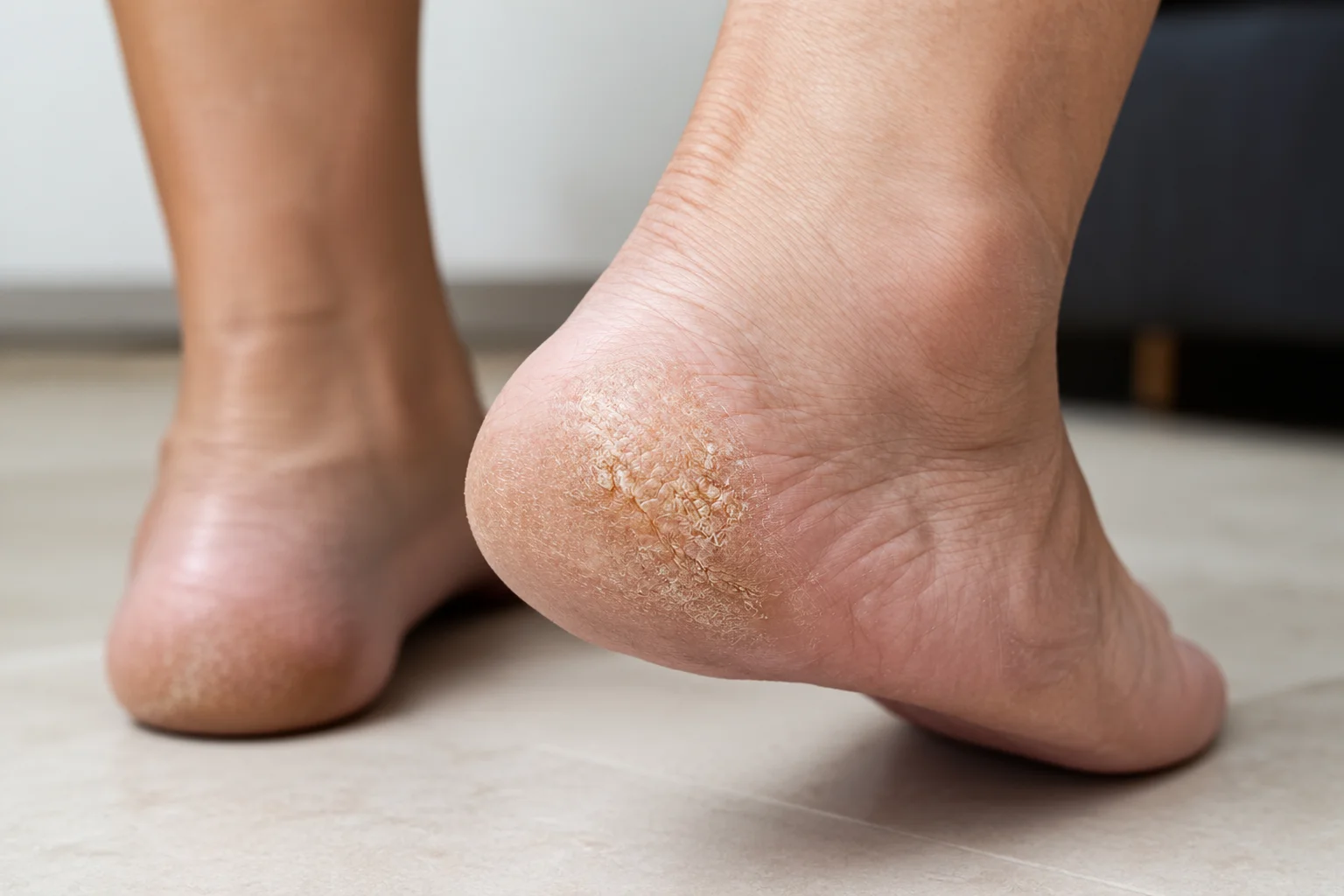
| On the heel (plantar surface) | Heel strike pressure | Hard-soled shoes, high body weight, heel-dominant gait, dry skin accelerating buildup |
| On the side of the big toe | Friction from shoe contact or gait | Narrow shoes, pronation-related shear, bunion prominence rubbing inside the shoe |
| On the tops or tips of toes | Friction from shoe contact | Hammer toes, claw toes, shoes with shallow toe box, toes gripping inside the shoe |
| On the outer edge of the foot | Lateral overload | Supination (outward rolling), high arches, worn shoe soles tilting the foot outward |
What Works: Professional Callus Treatment
Professional callus treatment delivers immediate relief and, when combined with pressure redistribution, long-term resolution.
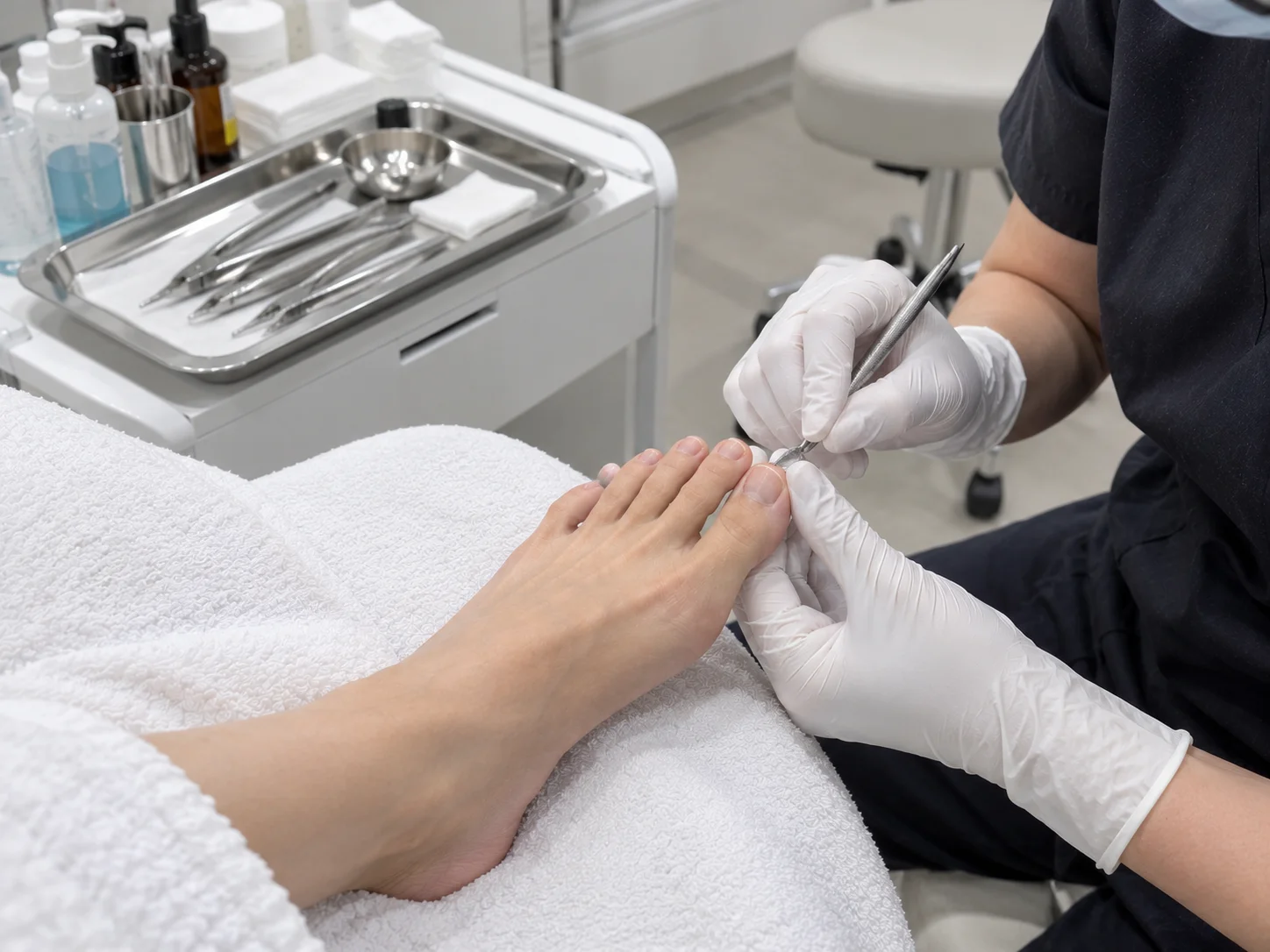
Professional debridement is the most effective treatment for existing calluses. Your podiatrist uses a sterile scalpel to carefully pare away the thickened, dead skin layer by layer until the callus is reduced to the level of the surrounding normal skin. This is painless because the debrided tissue is dead, keratinised skin with no nerve supply. The relief is immediate: pressure pain caused by the thick callus compressing the tissue underneath is eliminated as soon as the bulk is removed.
Professional debridement is a standard component of general podiatry appointments and medical pedicure (MediPedi) sessions at Sydney Foot Doctor. A MediPedi addresses calluses alongside nail care, skin health, and overall foot conditioning in a single clinical appointment.
Pressure redistribution with orthotics. Once the callus is removed, the next step is preventing it from rebuilding. Custom orthotics are designed specifically for your foot to redistribute pressure away from the areas where calluses form. An orthotic with metatarsal doming, for example, redistributes pressure across the entire forefoot rather than concentrating it under one or two metatarsal heads. This is the most effective long-term callus prevention tool available.
Footwear changes. Your podiatrist may recommend specific footwear changes based on where the calluses form. Shoes with a wider toe box eliminate friction on the sides and tops of toes. Shoes with better cushioning reduce impact pressure on the ball of the foot and heel. Shoes with a lower heel reduce forefoot loading. A footwear assessment provides personalised recommendations.
Padding and offloading. Felt or silicone pads placed around (not on top of) the callus area redistribute pressure away from the affected spot. Your podiatrist can apply temporary padding during the appointment and recommend take-home options for ongoing use between visits.
Moisturising. A urea-based foot cream (15 to 25 percent urea concentration) softens and hydrates the skin, reducing the rate of callus buildup between professional treatments. Urea is a keratolytic agent that breaks down the bonds between dead skin cells, keeping the skin softer and more flexible. Apply daily after bathing, particularly on the heels and ball of the foot.
What Makes Calluses Worse: Common Mistakes
Several popular home remedies and habits actually accelerate callus buildup or create new problems.
Using a razor blade or sharp instrument at home. Cutting calluses with a razor, blade, or non-sterile sharp instrument risks cutting too deep into live tissue, introducing infection, and removing skin unevenly. This is particularly dangerous for patients with diabetes or poor circulation where a small wound can become a serious complication. Leave scalpel debridement to a professional.
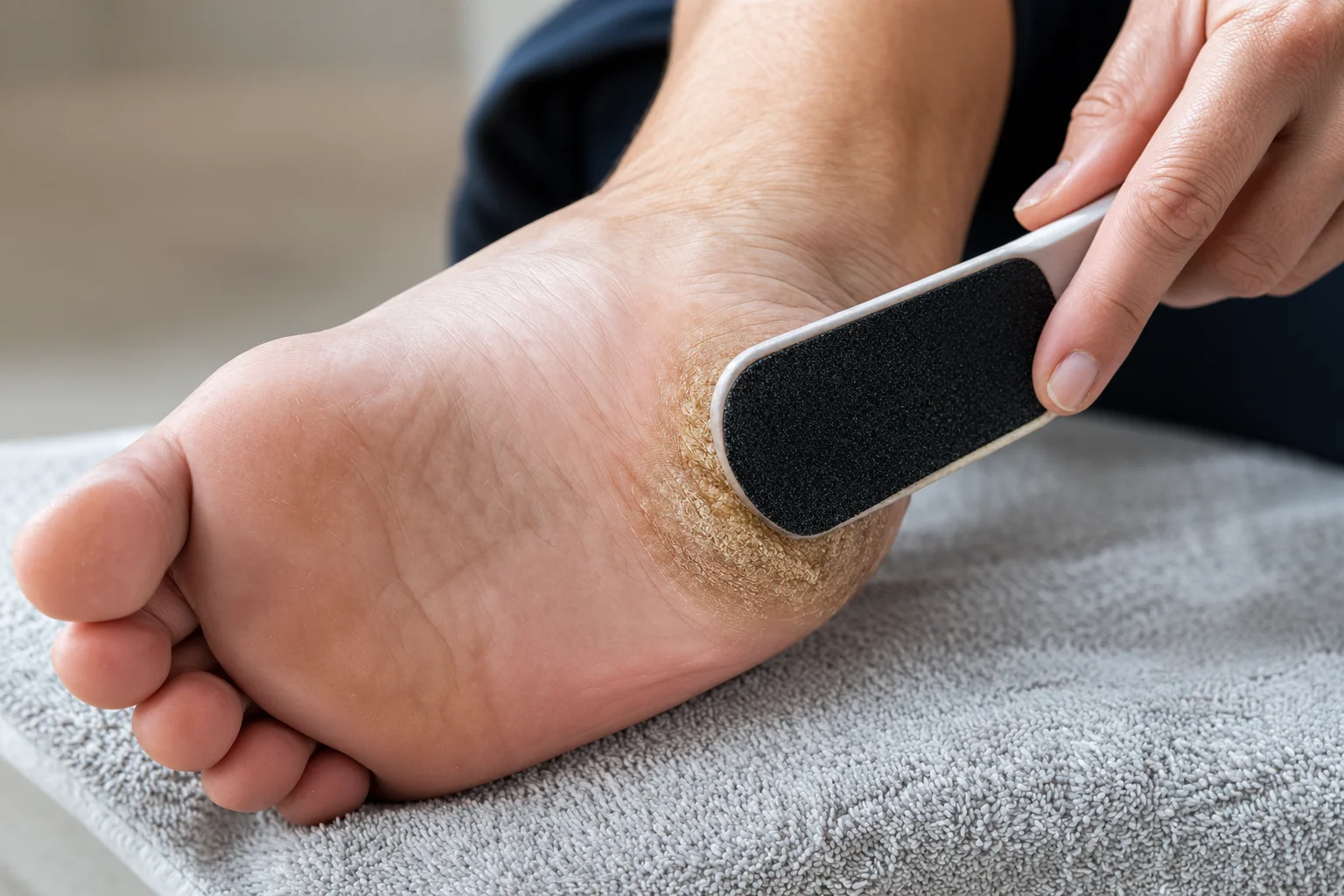
Overusing pumice stones or foot files aggressively. Light, gentle use of a pumice stone after bathing can help manage minor callus buildup between professional treatments. However, aggressive filing irritates the skin and triggers an increased keratinisation response: the body produces more hard skin faster to protect the area from the perceived trauma. Aggressive filing often makes calluses worse, not better.
Medicated corn and callus pads. Over-the-counter pads containing salicylic acid are designed to chemically dissolve hard skin. The problem is that the acid does not distinguish between callused skin and healthy skin around it. The acid can burn the surrounding normal tissue, create chemical ulcers, and cause significant damage, particularly in patients with diabetes, neuropathy, or reduced circulation. Podiatrists consistently advise against these products.
Ignoring the cause. Removing the callus without addressing the pressure that created it means the callus rebuilds within two to four weeks. Repeated cycles of buildup and removal without treating the cause (footwear, biomechanics, deformity) is an ongoing maintenance commitment that can be dramatically reduced or eliminated by addressing the root cause with orthotics and footwear changes.
Calluses vs Corns: Understanding the Difference
Calluses and corns are related but different conditions that require slightly different management.
| Feature | Callus | Corn |
|---|---|---|
| Appearance | Broad, diffuse area of thickened skin, usually yellowish | Small, concentrated, often with a hard central core |
| Location | Weight-bearing areas (ball of foot, heel) | Non-weight-bearing or bony prominences (tops of toes, between toes, sides of feet) |
| Cause | Diffuse pressure over a broad area | Concentrated pressure or friction on a small point |
| Pain pattern | Dull ache or burning under the thickened area | Sharp, localised pain when pressed directly |
| Treatment | Debridement of the broad area, pressure redistribution with orthotics | Enucleation (removal of the central core), padding, footwear modification |
Both conditions are treated during a general podiatry appointment. Your podiatrist determines whether the lesion is a callus, a corn, or a plantar wart (which can look similar to a callus but has a different cause and treatment) and applies the appropriate treatment.
When to See a Podiatrist About Calluses
Not every callus needs professional treatment. Mild calluses that cause no pain and respond to gentle home care (moisturising, light pumice use, proper footwear) may be managed independently.
See a podiatrist when:
The callus is painful during walking, standing, or wearing shoes. Pain indicates the callus has built up enough to compress the underlying tissue and nerve endings, and professional debridement provides immediate relief.
The callus keeps coming back despite home care. Recurring calluses in the same location indicate a biomechanical or footwear issue that needs professional assessment and correction with orthotics or footwear changes.
The callus has cracked or split. Deep cracks (fissures) in a callus, particularly on the heel, can extend into live tissue, bleed, and become infected. Professional debridement smooths the callus edges and reduces the buildup that causes cracking.
You have diabetes, peripheral neuropathy, or poor circulation. Any callus or skin change on the feet of a diabetic patient should be assessed professionally because reduced sensation means damage can progress unnoticed, and impaired circulation means wounds heal slowly. Callus management is a standard part of diabetic foot care at Sydney Foot Doctor.
The callus is on a toe and may be a corn. Corns require specific treatment (enucleation of the central core) that differs from broad callus debridement. A podiatrist distinguishes between the two and applies the correct treatment.
You are not sure if it is a callus or a wart. Plantar warts can look very similar to calluses, particularly on the ball of the foot and heel. The treatment is completely different (warts are caused by a virus, calluses by pressure), and misidentifying one as the other leads to inappropriate and ineffective home treatment.
Sydney Foot Doctor treats calluses across eight Sydney clinics, all located inside medical centres. For children developing calluses from sport or footwear, the children’s podiatry service provides age-appropriate assessment. For comprehensive foot conditioning that includes callus treatment alongside nail care and skin health, the MediPedi service addresses everything in one clinical appointment.