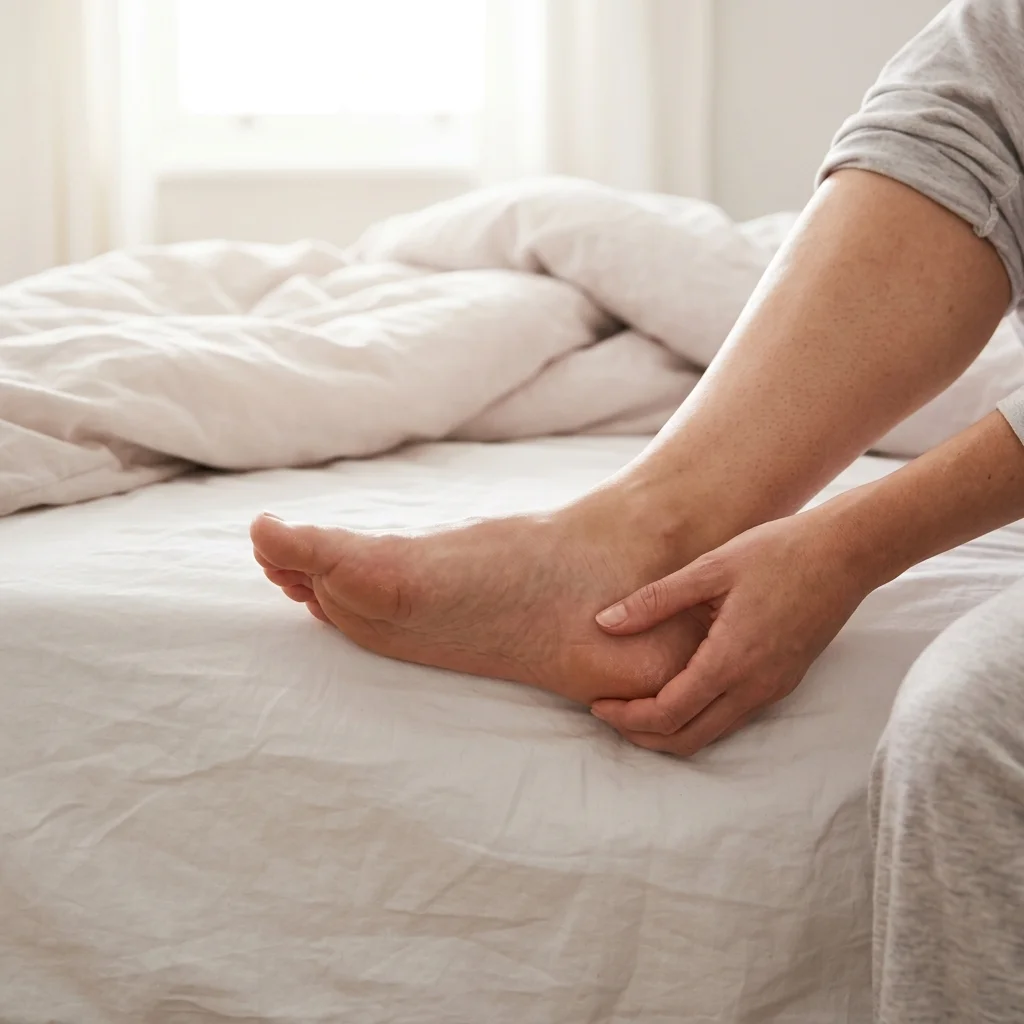
You roll out of bed in the morning and the moment your foot hits the floor, a sharp stabbing pain shoots through your heel. You hobble to the bathroom, wincing with every step. Then, strangely, after 10 or 15 minutes of walking around, the pain starts to ease.
If this sounds familiar, you are not alone. Morning heel pain is one of the most common complaints podiatrists see across all ages and activity levels. The good news is that in most cases it is highly treatable especially when addressed early.
This guide explains the most likely causes of your morning heel pain, what to do about it at home, and when it is time to see a podiatrist.
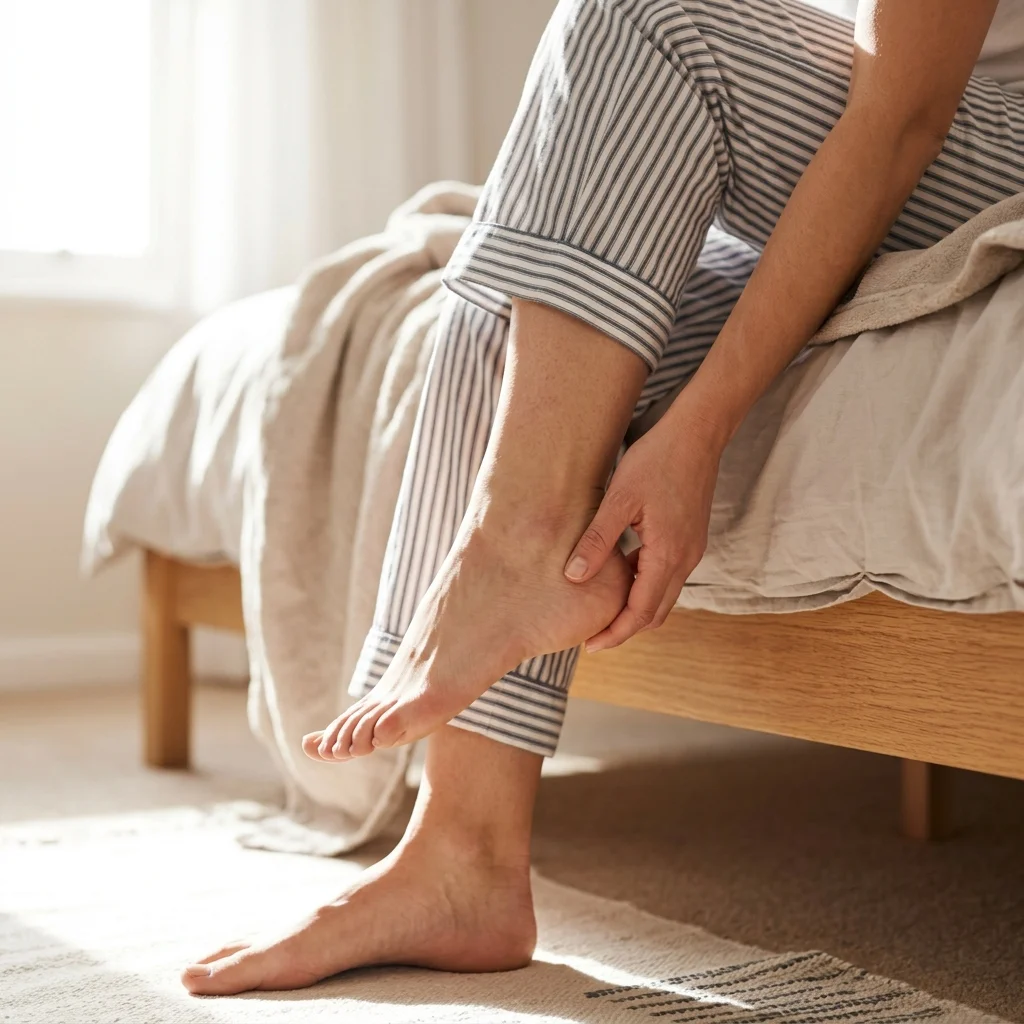
Why Does Heel Pain Feel Worse in the Morning?
The reason heel pain is typically worst in the morning and then gradually improves comes down to what happens to the tissues in your foot while you sleep.
When you rest with your feet in a relaxed position overnight, the plantar fascia (the thick band of connective tissue running along the bottom of your foot) and the Achilles tendon shorten and contract slightly. The moment you stand up and place weight on your foot, these tissues are suddenly stretched and if there is existing inflammation or microscopic damage in them, that stretch triggers pain.
As you walk around and the tissues warm up and loosen, the pain typically subsides. This pattern of pain severe on first steps, easing with movement is the hallmark of plantar fasciitis and is one of the most recognisable presentations podiatrists look for.
The Most Common Causes of Morning Heel Pain
1. Plantar Fasciitis
Plantar fasciitis is by far the most common cause of morning heel pain. It occurs when the plantar fascia the band of tissue connecting your heel bone to your toes becomes inflamed from overuse, poor footwear, or excessive strain.
You are more likely to develop plantar fasciitis if you are on your feet for long periods, have recently increased your activity levels, are carrying extra weight, or wear footwear without adequate arch support. It is extremely common in runners, retail and hospitality workers, teachers, and tradies.
The pain is typically felt as a sharp, stabbing sensation on the bottom of the heel, particularly with those first steps in the morning or after sitting for a long time. Without proper treatment, plantar fasciitis can become a chronic condition that significantly affects daily life.
At Sydney Foot Doctor, our podiatrists regularly treat plantar fasciitis using a combination of stretching programs, custom orthotics, footwear advice, and hands-on care. Most patients see significant improvement within weeks of starting treatment.
2. Achilles Tendinopathy
Achilles tendinopathy refers to degeneration or irritation of the Achilles tendon, the large tendon connecting your calf muscles to your heel bone. Pain from Achilles tendinopathy is typically felt at the back of the heel rather than underneath it, and is often accompanied by stiffness in the morning that improves with gentle movement.
This condition is common in active adults, especially those who have recently increased their running volume, changed their footwear, or returned to sport after a period of rest. Our podiatrists can assess your Achilles tendon and design a graduated loading program to help it recover safely.
3. Heel Bursitis
Bursae are small fluid-filled sacs that cushion the joints and tendons. When the bursa at the back of the heel becomes inflamed often from prolonged pressure, ill-fitting footwear, or overuse it causes a condition called heel bursitis. The pain is usually felt at the very back of the heel and may be accompanied by swelling or a noticeable lump.
4. Flat Feet or High Arches
Abnormal foot mechanics whether from flat feet (overpronation) or high arches (supination) alter the way forces are distributed across your foot with every step. Over time, this places excessive strain on the heel, arch, and surrounding tissues. Custom orthotics prescribed by a podiatrist are one of the most effective long-term solutions for addressing the underlying mechanical cause.
5. Heel Spurs
A heel spur is a bony growth that develops on the underside of the heel bone, often as a result of long-standing plantar fasciitis. Contrary to popular belief, the spur itself is not usually the primary source of pain the surrounding inflamed tissue is. Many people have heel spurs on imaging with no pain at all. Treatment focuses on addressing the inflammation and mechanical causes rather than the spur itself.
What to Do at Home
If your heel pain is mild and has been present for less than 2 weeks, these home strategies can provide relief:
Morning stretch routine (do this before getting out of bed)
- While still lying down, loop a towel or belt around the ball of your foot
- Gently pull the toes toward your shin until you feel a stretch along the bottom of your foot
- Hold for 30 seconds and repeat 3 times on each foot
- Then stand up slowly. Do not jump straight out of bed onto a hard floor
Footwear changes
One of the fastest ways to reduce morning heel pain is to stop walking barefoot on hard floors especially first thing in the morning. Put on supportive shoes or thongs with arch support the moment you get up. Avoid flat, unsupportive footwear like ballet flats, old sneakers, or cheap slides.
Icing
Rolling a frozen water bottle under your foot for 10–15 minutes after activity helps reduce inflammation. Do this in the evening after a day on your feet rather than in the morning.
Activity modification
Temporarily reduce high-impact activities like running and jumping. Swap for lower-impact options like swimming or cycling while the tissue heals. Completely stopping all activity is usually not necessary or helpful.

When to See a Podiatrist
Home treatment can be effective for mild cases but there are clear signs that professional assessment is needed:
- Pain has lasted more than 2 weeks without improvement
- Pain is getting progressively worse rather than staying the same
- You are changing the way you walk to avoid the pain
- The pain is affecting your work, exercise, or daily activities
- You have swelling, bruising, or significant tenderness to touch around the heel
- Pain came on suddenly after an injury or fall
Ignoring heel pain and hoping it goes away on its own often leads to a longer, more difficult recovery. Conditions like plantar fasciitis that are caught early typically resolve within 6–8 weeks with appropriate podiatry care. Left untreated, the same condition can persist for 12 months or more and may require more involved treatment.
Our podiatrists at Sydney Foot Doctor take a thorough approach to heel pain assessment. We look at your foot mechanics, footwear, activity levels, and lifestyle to understand the root cause not just the symptoms. From there we build a personalised treatment plan that gets you back on your feet as efficiently as possible.
What to Expect at Your Podiatry Appointment
If you have never seen a podiatrist before, here is what a typical heel pain assessment looks like at Sydney Foot Doctor:
- History: We will ask about when the pain started, what makes it better or worse, your footwear, activity levels, and any previous treatments
- Physical assessment: We examine your foot, assess your range of motion, check your arch and gait, and identify exactly where the pain is coming from
- Diagnosis: We explain the cause in plain language. No jargon, no rushing
- Treatment plan: Depending on the cause, this might include a personalised stretching program, orthotic therapy, footwear recommendations, taping, or other hands-on treatment
- Follow-up: We track your progress and adjust the plan as needed
Most patients feel a significant improvement after their first or second appointment. The goal is always to address the underlying cause not just provide temporary pain relief.
Services That Help With Heel Pain
Depending on the cause of your heel pain, the following Sydney Foot Doctor services may be recommended as part of your treatment:
- Custom Orthotics — Precisely prescribed insoles that correct foot mechanics and offload the heel
- Orthotic Therapy — A comprehensive approach to managing foot and heel conditions through movement and support
- Dry Needling — Targeted treatment to release tight muscles and trigger points contributing to heel pain
- Laser Therapy — A non-invasive option to reduce inflammation and accelerate tissue healing
- Injections — For cases where conservative treatment has not provided sufficient relief