What Is Toenail Fungus?
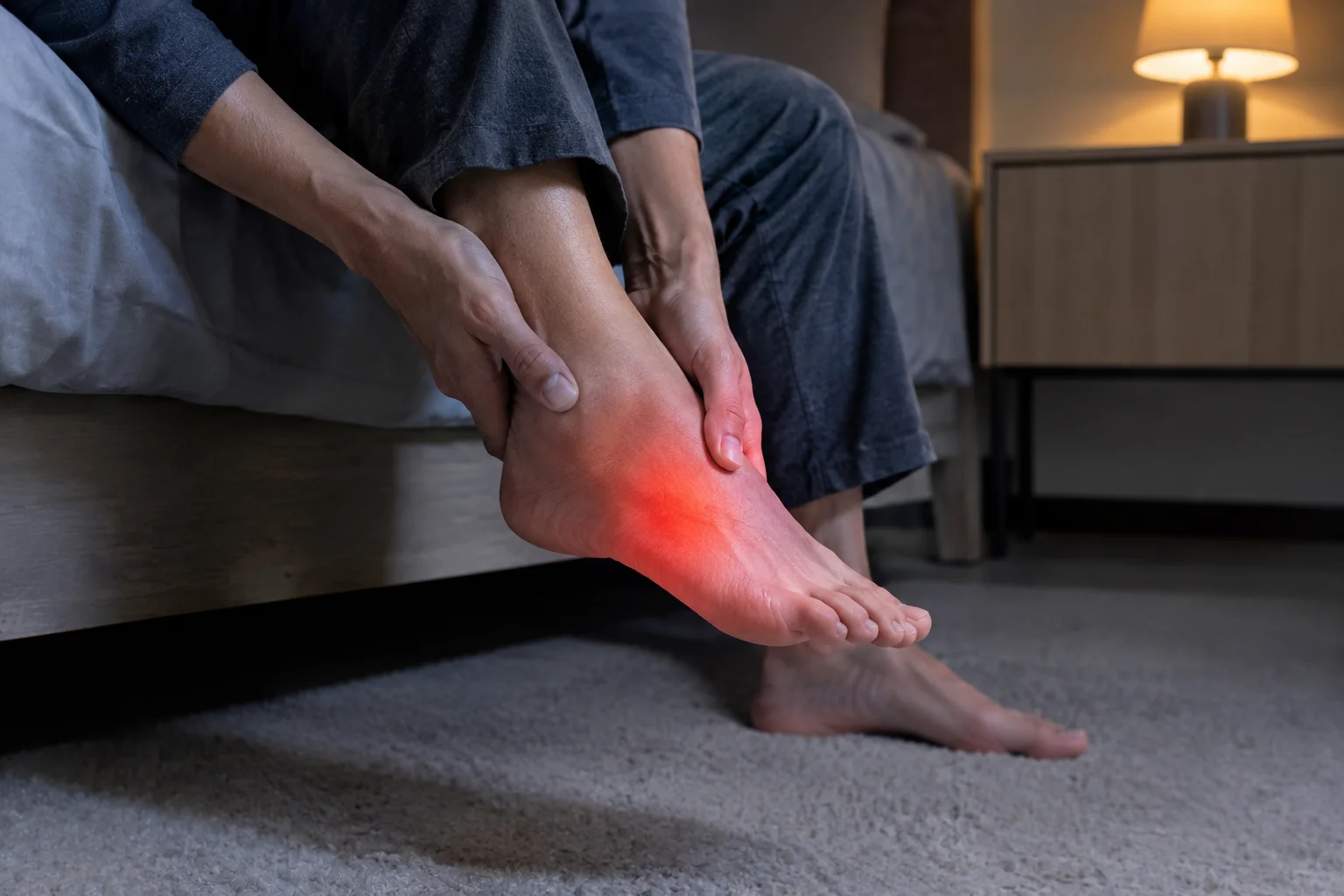
Toenail fungus (onychomycosis) is a fungal infection caused primarily by dermatophyte fungi, though yeasts and moulds can also be responsible. The infection begins when fungal organisms enter through microscopic gaps between the nail plate and the nail bed, typically at the free edge of the nail or through trauma-related damage.
Once established, the fungus feeds on the keratin protein that makes up the nail. Over time, the nail becomes thickened, discoloured (yellow, brown, white, or greenish), brittle, crumbly, and distorted in shape. In advanced cases, the nail may partially separate from the nail bed (onycholysis), develop a foul odour, and become painful when pressure is applied from footwear.
Fungal nail infections are extremely common in Australia. Warm, humid conditions inside closed shoes create the ideal environment for fungal growth, and the infection spreads readily in communal environments like swimming pools, gym change rooms, and shared showers.
For a detailed guide on identifying the condition early, read the early signs of fungal nail infection guide. Early treatment is significantly more effective than treating advanced infections.
Why Topical Treatments Often Fail
Most people start with over-the-counter antifungal nail paints, creams, or lacquers from the pharmacy. While these products can help with very early, superficial infections, they fail on established fungal nail infections for a specific reason.
The nail plate acts as a physical barrier. Topical products are applied to the surface of the nail, but the fungal organisms live underneath the nail in the nail bed. The nail plate is made of dense, layered keratin that most topical antifungals cannot penetrate deeply enough to reach the infection at its source. The product sits on the surface, the fungus lives underneath, and the infection continues to spread.
This is why patients often use topical treatments diligently for months and see no improvement. The product is working on the surface that does not need treating, while the fungus thrives undisturbed in the nail bed below.
“The most common thing we hear from patients is ‘I have been using the nail paint for six months and nothing has changed.’ That is because the infection is under the nail, not on it. Topical products simply cannot reach where the fungus lives in most established infections.”
How Laser Treatment Works
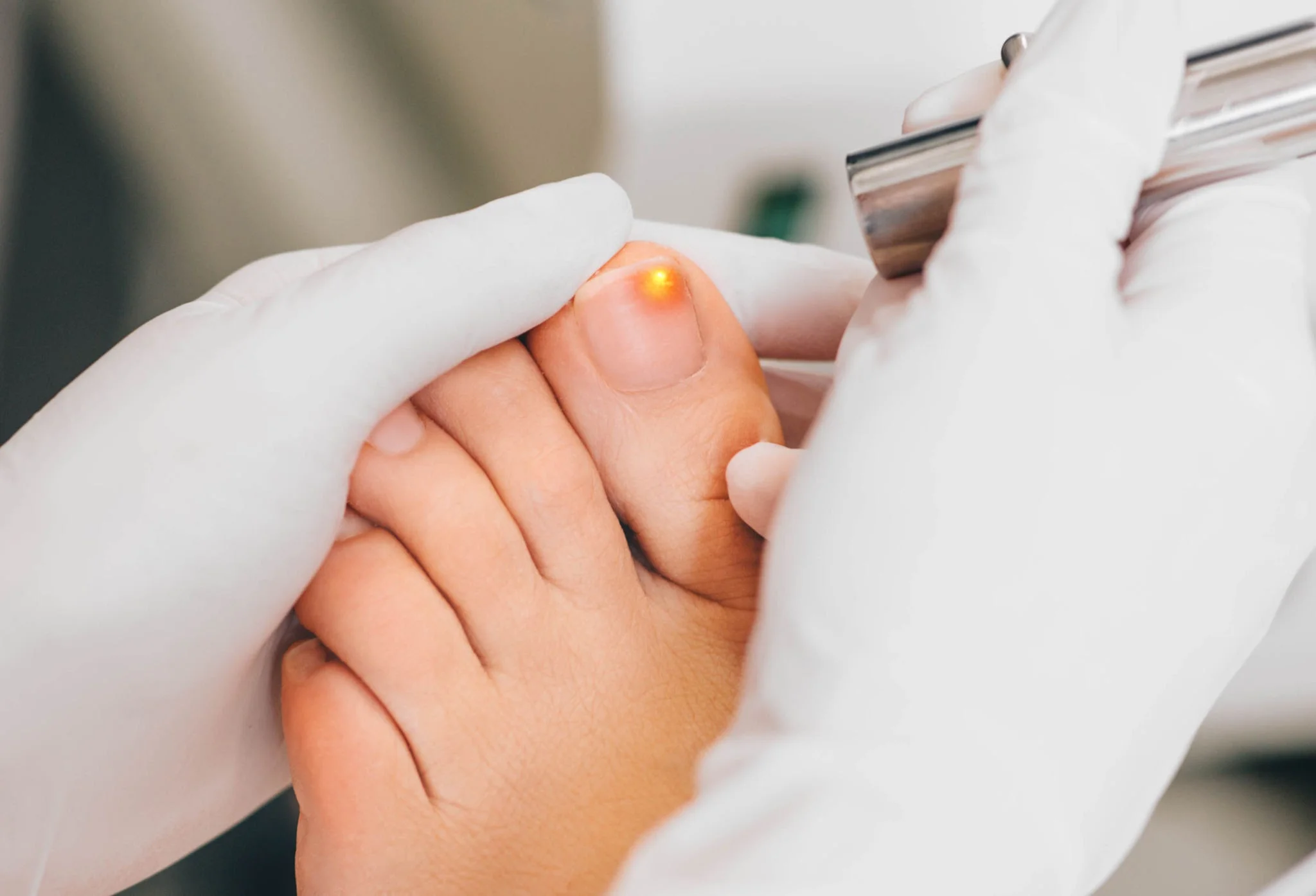
Laser treatment for toenail fungus uses a specific wavelength of light that passes through the nail plate and targets the fungal organisms in the nail bed and nail matrix (the growth centre beneath the cuticle).
The science behind it. The laser emits light at a wavelength that is absorbed by the fungal cells but passes through human tissue with minimal effect. When the fungal cells absorb the laser energy, they heat up rapidly. This thermal damage disrupts the fungal cell membranes, denatures their proteins, and destroys their ability to reproduce. The surrounding nail tissue and skin are not damaged because they do not absorb the laser energy at the same rate.
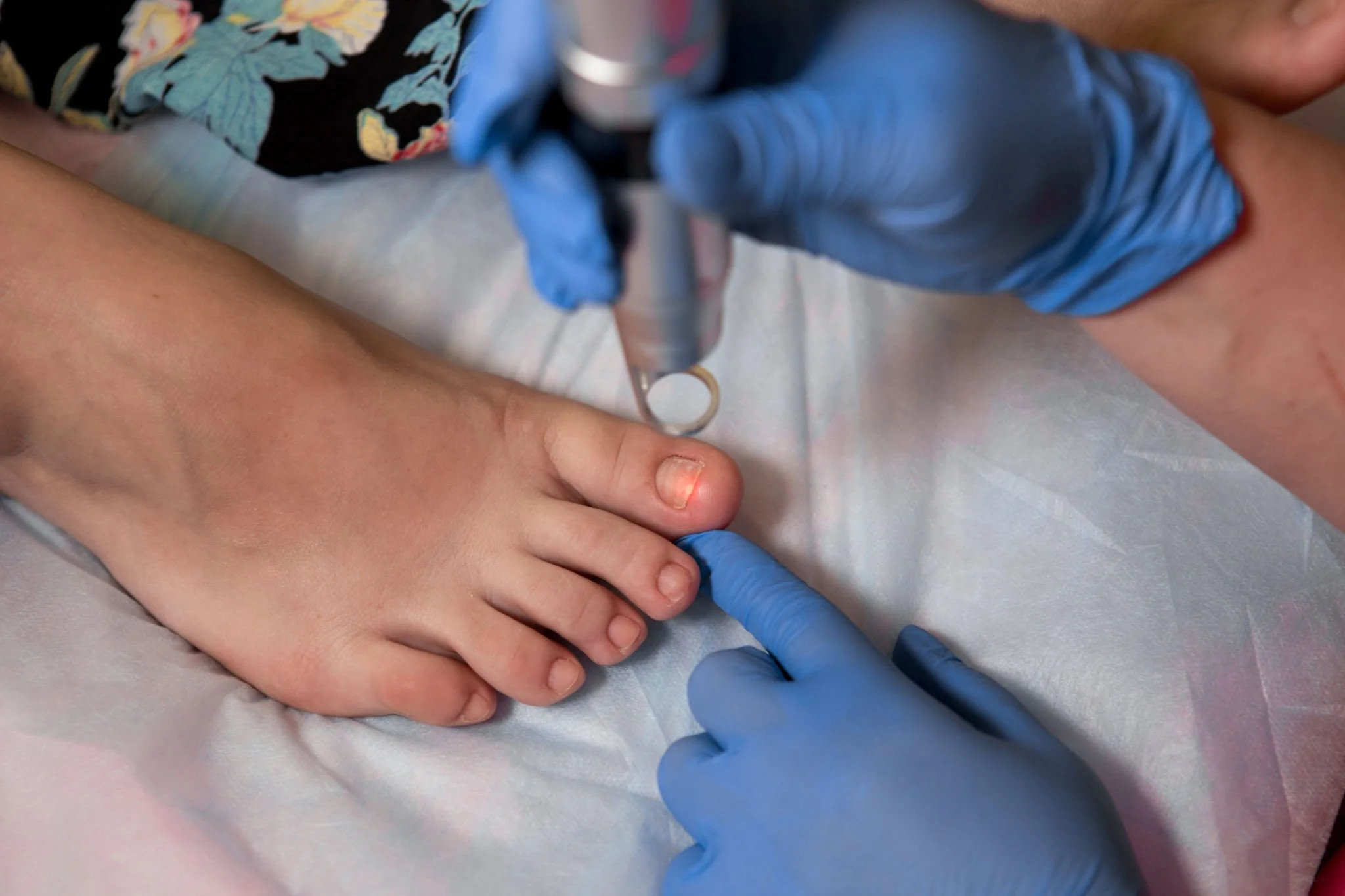
What happens during a session. The podiatrist positions the laser device over each affected nail and applies the laser in a systematic pattern across the entire nail surface and surrounding nail folds. Each nail takes approximately three to five minutes. You may feel a gentle warming sensation during treatment, but it is not painful and no anaesthetic is needed.
What happens after. There is no downtime. You walk out of the clinic, put your shoes on, and continue your day normally. There is no wound, no dressing, and no activity restriction.
The timeline for visible results. This is the part that requires patience. Laser treatment destroys the fungal organisms, but the damaged, discoloured nail that is already grown out does not change in appearance. New, healthy nail must grow from the matrix to replace the infected nail. Toenails grow at approximately one to two millimetres per month, which means it takes six to twelve months (sometimes longer for big toenails) for the full visual result to become apparent. During this time, you will see healthy, clear nail emerging from the base while the old, discoloured nail gradually grows out and is trimmed away.
Laser Treatment Compared to Other Options
Understanding how laser compares to the other treatment methods helps you make an informed decision.
| Factor | Topical Antifungal | Oral Antifungal (Tablets) | Laser Treatment |
|---|---|---|---|
| How it works | Applied to nail surface, attempts to penetrate to nail bed | Taken orally, antifungal drug reaches nail bed via bloodstream | Light energy passes through nail plate, destroys fungus in nail bed directly |
| Effectiveness for mild infection | Moderate (superficial infections only) | High | High |
| Effectiveness for moderate to severe | Low (cannot penetrate thick nail) | High | High |
| Treatment duration | 6 to 12 months of daily application | 3 to 6 months of daily tablets | 3 to 6 sessions over 6 to 12 weeks |
| Side effects | Minimal (skin irritation possible) | Liver toxicity risk, requires blood tests, drug interactions | None reported |
| Requires blood monitoring | No | Yes (liver function tests before and during) | No |
| Drug interactions | None | Multiple (statins, blood thinners, others) | None |
| Pain during treatment | None | None | None to mild warmth |
| Downtime | None | None | None |
| Success rate | 10 to 15% for established infections | 60 to 80% | 60 to 80% (combined with other approaches) |
| Suitable for diabetic patients | Yes | Requires careful monitoring | Yes, often preferred |
For patients who cannot take oral antifungal medication (due to liver concerns, drug interactions, or personal preference), laser treatment provides an effective alternative that achieves comparable success rates without systemic side effects.
What a Laser Treatment Program Looks Like
Laser treatment for fungal nails is not a single session fix. It is a structured program designed to eliminate the infection completely and prevent recurrence.
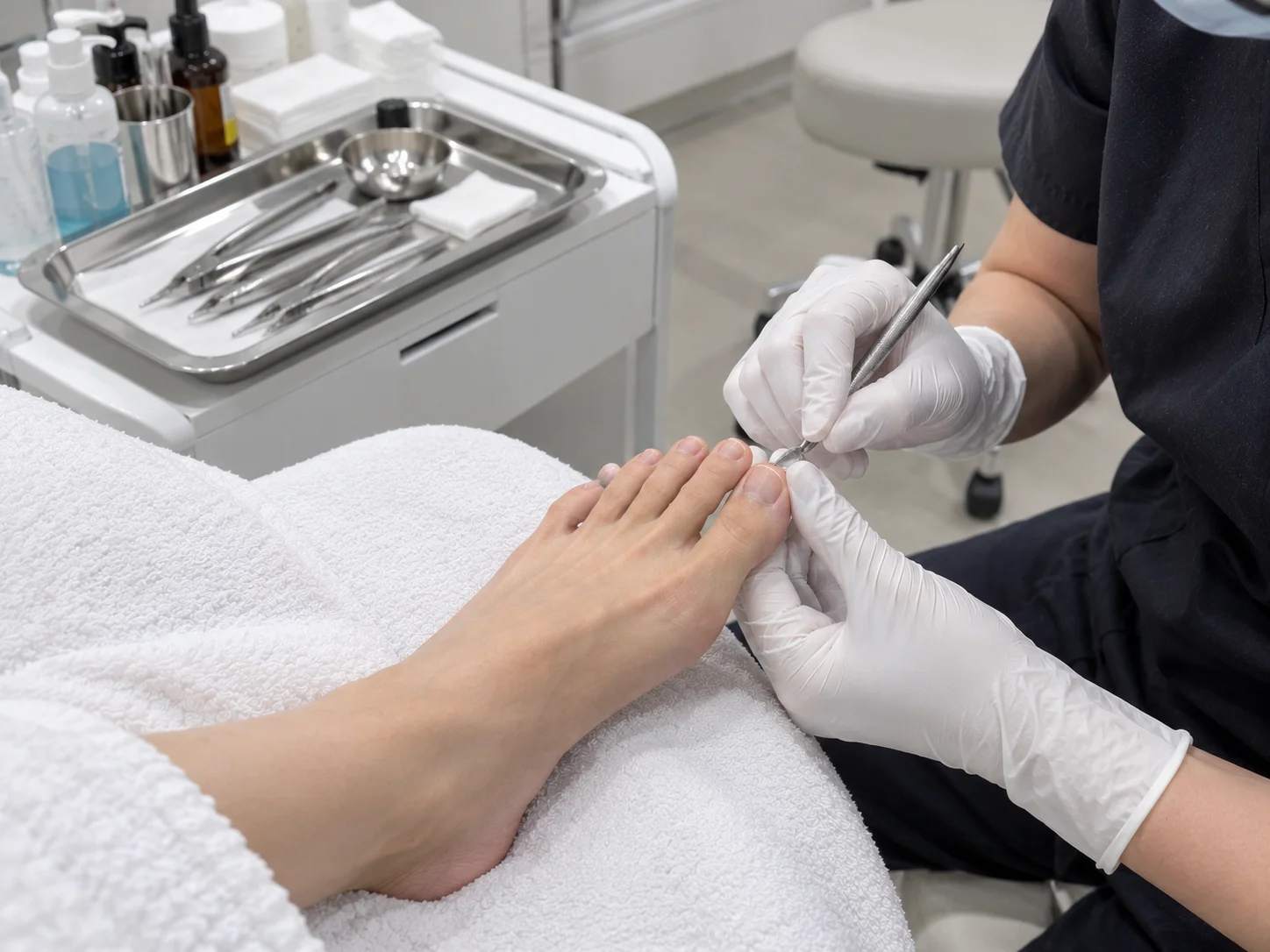
Initial assessment. Your podiatrist examines all toenails (and fingernails if relevant), confirms the fungal diagnosis, assesses the severity and number of affected nails, and discusses your treatment history. In some cases, a nail clipping may be sent for laboratory culture to confirm the fungal species and guide treatment. This assessment is part of the fungal nail treatment service at Sydney Foot Doctor.
Nail preparation. Before the first laser session, the affected nails are debrided (thickened portions are carefully reduced using a podiatric burr). Thinning the nail allows the laser energy to penetrate more effectively to the nail bed. This preparation is performed by your podiatrist and is painless.
Treatment sessions. Most treatment programs involve three to six laser sessions spaced two to four weeks apart. Each session treats all affected nails and takes approximately 20 to 30 minutes. The spacing between sessions allows time for any surviving fungal organisms to become more metabolically active (and therefore more susceptible to the next treatment) as the nail grows.
Follow-up and monitoring. After the treatment series, your podiatrist monitors the nail growth at regular intervals to confirm healthy nail is emerging from the base. Follow-up appointments are typically scheduled every six to eight weeks during the grow-out period.
Maintenance. Even after successful treatment, the risk of reinfection exists because fungal spores can survive in shoes, socks, shower floors, and carpet. Your podiatrist will advise on prevention strategies to reduce the chance of recurrence.
Preventing Reinfection After Treatment
Successful laser treatment eliminates the active infection, but reinfection is common if the environmental sources of fungal spores are not addressed. These habits significantly reduce the risk.
Treat your shoes with an antifungal spray or powder during and after treatment. Fungal spores survive inside footwear and can reinfect the nail each time you put your shoes on. Rotate between at least two pairs of shoes to allow each pair to dry out completely between wears.
Wash socks at 60 degrees Celsius or above to kill fungal spores. Regular cold wash cycles do not destroy the organisms.
Keep toenails trimmed short and straight across. Longer nails trap moisture and debris underneath, creating conditions that favour fungal growth. If you are unsure about safe nail cutting technique, a professional medical pedicure provides clinical-grade nail care.
Dry feet thoroughly after showering, especially between the toes. Moisture between the toes promotes athlete’s foot (tinea pedis), which is caused by the same fungi and frequently spreads to the toenails.
Wear thongs or pool shoes in communal wet areas such as swimming pools, gyms, and shared showers. These are the highest-risk environments for picking up fungal organisms.
Choose breathable footwear and moisture-wicking socks to reduce the warm, humid environment inside shoes that fungi thrive in. A footwear assessment can identify whether your current shoes are contributing to the problem.
Who Is a Good Candidate for Laser Treatment?
Laser treatment is suitable for most patients with fungal nail infections. It is particularly beneficial for patients who have tried topical treatments without success (the most common scenario), patients who cannot or prefer not to take oral antifungal medication due to liver concerns, drug interactions, or side effects, patients with diabetes or circulatory issues where systemic medication requires additional monitoring (laser treatment at Sydney Foot Doctor is often the preferred option for patients already managing diabetic foot care), patients with multiple affected nails where oral medication would require a longer course, and patients who want a treatment option with no side effects, no blood monitoring, and no downtime.
Laser treatment may be less effective as a standalone treatment for very severely infected nails where the nail plate has largely separated from the bed (severe onycholysis) or where the infection has affected the entire nail matrix. In these cases, a combined approach using laser alongside topical antifungals or debridement may be recommended.
How Much Does Laser Treatment Cost?
Laser treatment for fungal nails is not currently covered by Medicare or private health insurance in Australia, so it is an out-of-pocket expense. The cost varies depending on the number of nails treated and the number of sessions in the treatment program.
At Sydney Foot Doctor, the treatment cost covers the initial assessment, nail preparation, all laser sessions in the treatment program, and follow-up monitoring appointments. Contact us for current pricing specific to your situation.
When evaluating cost, consider that oral antifungal medication requires a GP consultation, prescription costs, multiple blood tests for liver function monitoring, and the ongoing cost of the medication itself over three to six months. When these costs are totalled, the price difference between oral medication and laser treatment is often smaller than patients expect.
When to See a Podiatrist for Fungal Nails
Book an appointment if you notice discolouration (yellow, brown, white, or green) on one or more toenails. If the nail is becoming thickened, brittle, or crumbly, early treatment prevents the infection spreading to other nails. If topical treatments have not improved the nail after two to three months, professional treatment is needed. If you have diabetes or a compromised immune system, any nail change should be assessed promptly because fungal infections carry higher complication risks.
Sydney Foot Doctor treats fungal nail infections across eight Sydney clinics, all located inside medical centres for convenient access. The children’s podiatry service also treats fungal nails in younger patients.