Quick Overview
Cracked heels, also called heel fissures, are one of the most common foot problems we see, especially over the warmer months when many of us spend our days in thongs and sandals. For some people they are simply dry and rough. For others, the cracks become deep enough to hurt, bleed or let infection in.
This guide explains why heels crack, what you can safely try at home, and when it is time to see a podiatrist.
What are cracked heels?
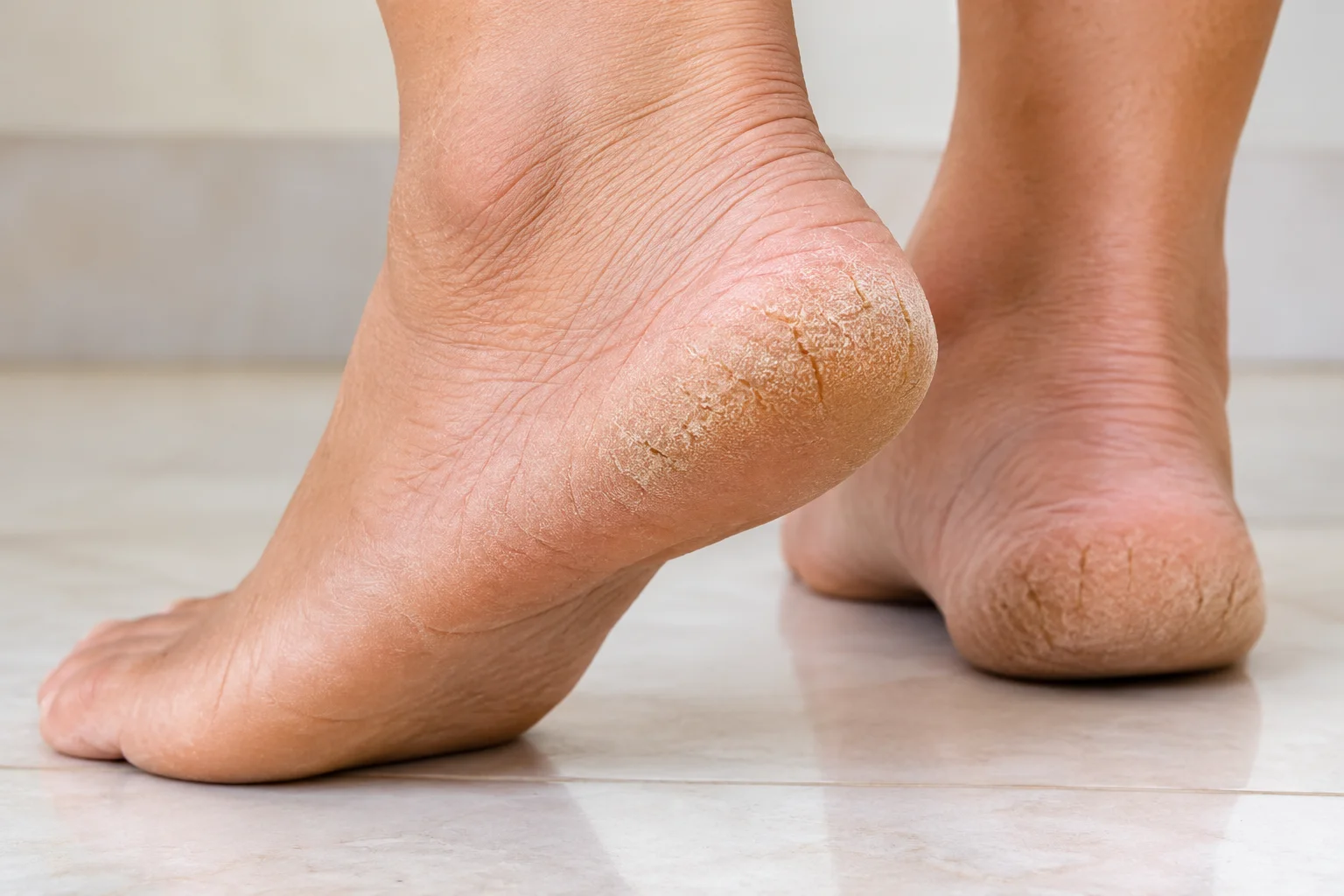
The skin on your heels is naturally thicker than the skin elsewhere on your body. When it becomes dry and hardened, it loses its ability to stretch. Each time you take a step, the fat pad under your heel spreads out slightly. If the skin around the edge of the heel is too dry and stiff to move with it, it splits.
Cracks usually start as small, shallow lines in the outer layer of skin. Without care, they can deepen into fissures that reach the living skin underneath, which is when they start to become painful.
Common signs of cracked heels
- Dry, rough or flaky skin around the rim of the heel
- Thick, hard skin (callus) that may look yellow or brown
- Visible lines or splits in the skin
- Pain or tenderness when standing or walking
- Bleeding from deeper cracks
- Redness, swelling, warmth or discharge, which can be signs of infection and need prompt attention
What causes cracked heels?
Cracked heels usually come from a combination of dry skin and pressure on the heel. Common contributing factors include:
- Dry skin: low humidity, air conditioning, long hot showers and harsh soaps all strip moisture from the skin.
- Open-backed footwear: thongs, slides and backless sandals give the heel no support, so the heel pad spreads more with every step.
- Standing for long periods: especially on hard floors at work.
- Thick callus on the heel rim: hard skin cannot stretch, so it is more likely to split.
- Extra pressure on the heel: body weight and the way you walk can increase the load on the heel pad.
- Ageing: skin produces less natural oil as we get older and dries out more easily.
- Skin conditions: eczema, psoriasis and tinea (a fungal infection, often called athlete’s foot) can look like ordinary dry skin.
- Health conditions: diabetes can affect the nerves that control sweating, leaving feet very dry. Thyroid conditions can also cause dry skin. If you have one of these conditions, your feet need extra care.
Home care for mild cracked heels
If your heels are dry with only shallow cracks and no pain, bleeding or signs of infection, these steps often help:
- Moisturise twice a day. Apply a heel or foot cream after showering and before bed. Creams containing urea are commonly used for dry, thickened skin; your pharmacist can help you choose one. Avoid applying cream between your toes.
- File gently. Use a foot file or pumice stone on dry skin a few times a week, with light strokes. Stop if the area becomes sore, and never file over an open crack.
- Wear socks overnight. Putting on clean cotton socks after moisturising at night helps the cream stay on your skin.
- Choose supportive footwear. Shoes with an enclosed heel, or sandals with a heel strap and a cushioned sole, reduce the spreading that causes cracks.
- Keep showers warm, not hot. Use a gentle, soap-free wash and pat your feet dry.
- Check your heels each week so you notice any changes early.
What to avoid
- Do not cut, shave or pick at hard skin with razors, scissors or blades. This can cause wounds and infection.
- Do not use medicated corn pads or acid treatments on cracked skin, particularly if you have diabetes or poor circulation.
- Do not ignore cracks that bleed or keep getting deeper.
When to see a podiatrist
Book an appointment with a podiatrist if:
- Your cracks are deep, painful or bleeding
- Your heels have not improved after two to three weeks of regular home care
- You notice redness, swelling, warmth, discharge or increasing pain around a crack (if you also feel unwell or have a fever, see your GP promptly)
- You have diabetes, poor circulation, numbness in your feet or a condition that affects your immune system. In these cases it is safer not to treat cracks yourself, because a small crack can turn into a wound that is slow to heal
- The hard skin keeps coming back quickly
- You are not sure whether it is dry skin or a skin condition such as tinea
If you have diabetes, regular foot checks are an important part of looking after your health. You can read more about our podiatry services, including foot care for people with diabetes.
How our podiatrists can help
At your appointment, a podiatrist will look at your heels, your footwear, how you stand and walk, and your health history to work out what is contributing to the cracks. Depending on what they find, care may include:
- Safely reducing thickened skin and smoothing the edges of cracks using sterile instruments
- Advice on moisturisers and a home routine that suits your skin
- Footwear advice, and heel cups or padding to reduce pressure on the heel
- Checking for a fungal infection or another skin condition, and referring you to your GP if needed
- Discussing whether orthotics may help if your foot posture or walking pattern is adding pressure to the heel
- Regular general foot care visits if you find it hard to reach or manage your heels yourself
Preventing cracked heels from coming back
- Keep moisturising daily, even once your heels feel better
- Wear shoes with a supportive, enclosed heel for long days on your feet
- File gently once a week to stop hard skin building up
- Check your feet regularly, especially if you have diabetes
- Keep up regular podiatry reviews if your podiatrist recommends them
Sydney Foot Doctor
Cracked Heels at a Glance
Common causes
- Dry skin from heat, air conditioning or hot showers
- Thongs and backless sandals
- Long hours standing on hard floors
- Thick hard skin on the heel rim
- Diabetes, thyroid or skin conditions
Home care for mild cracks
- Moisturise twice a day
- File gently on dry skin, never over open cracks
- Cotton socks overnight after cream
- Shoes with an enclosed heel or heel strap
- Never cut or shave hard skin
See a podiatrist if
- Cracks are deep, painful or bleeding
- No improvement after 2 to 3 weeks
- Redness, swelling, warmth or discharge
- You have diabetes or poor circulation
- Hard skin keeps coming back
General information only. Clinics across Sydney, open Monday to Saturday, 9am to 5pm.